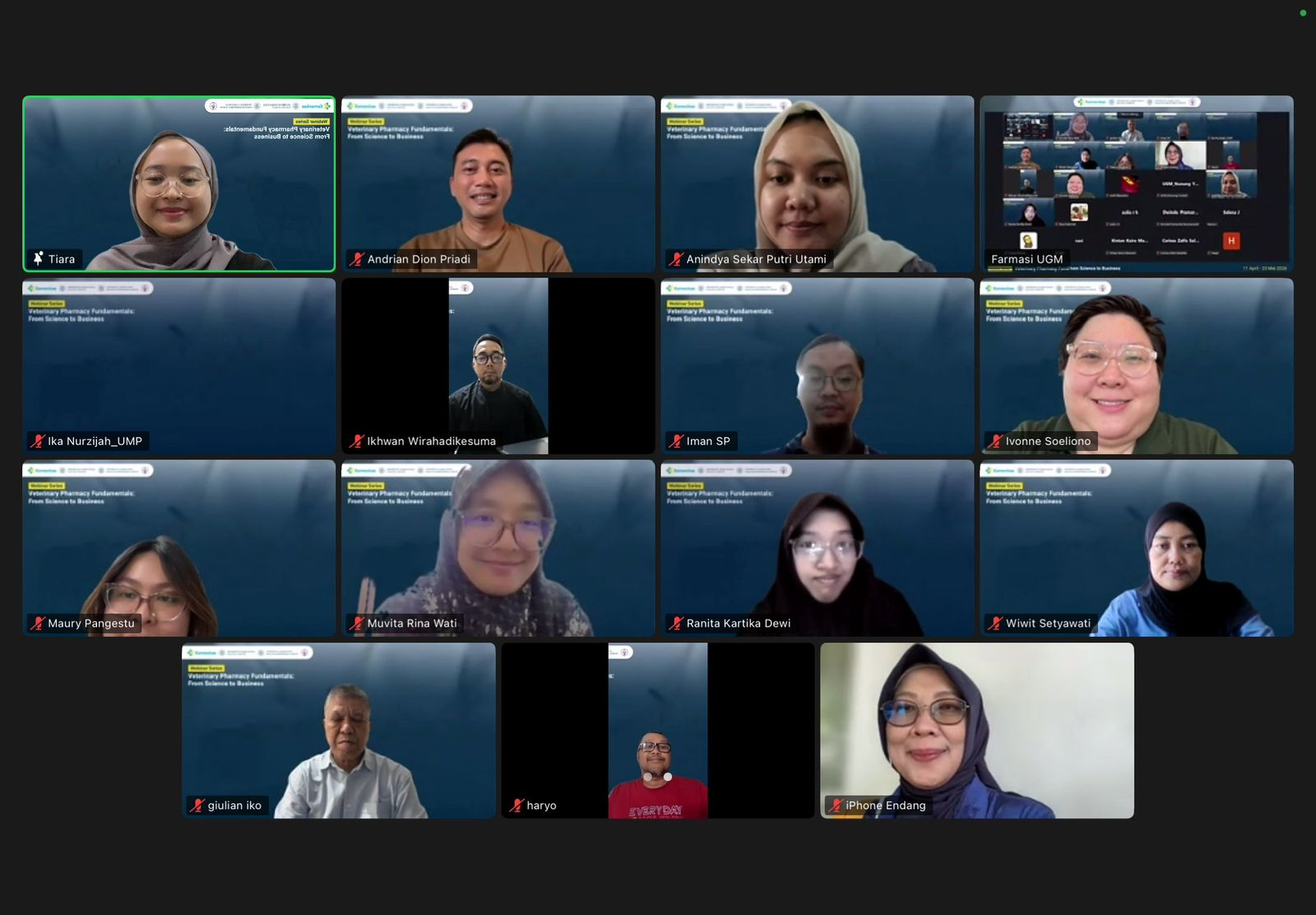
Yogyakarta, May 23, 2026 — The Faculty of Pharmacy Universitas Gadjah Mada successfully organized the National Veterinary Pharmacy Webinar Series entitled “Veterinary Pharmacy Fundamentals: From Science to Business”, which was conducted online via Zoom Meeting from April 11 to May 23, 2026. Held on a national scale, the webinar series served as an interdisciplinary learning forum that brought together pharmacists, veterinarians, academics, students, and practitioners from the livestock and fisheries sectors to discuss the developments, challenges, and opportunities in veterinary pharmacy in Indonesia.
The webinar series was organized in response to the growing need for a more professional, safe, and sustainable animal healthcare system amid the rapid growth of Indonesia’s livestock and fisheries sectors. In addition, issues such as antimicrobial resistance, food safety of animal-origin products, veterinary pharmaceutical waste management, and regulatory strengthening have become increasingly important and require multi-stakeholder collaboration through the One Health approach.
Throughout the six-week program, participants received comprehensive materials covering animal anatomy and physiology, pharmacology, toxicology, veterinary drug regulations, pharmacotherapy for companion and livestock animals, and veterinary pharmacy practices in industrial settings. The webinar series also featured hands-on sessions on dosage calculations and mass prescription practices led by Dr. apt. Nunung Yuniarti, S.F., M.Si. together with apt. Muvita Rina Wati, M.Sc.
In addition to therapeutic and regulatory aspects, the program addressed strategic issues such as zoonotic disease management, food safety of animal-origin products, the use of medication in aquaculture, antimicrobial resistance mechanisms from the One Health perspective, as well as the management of veterinary pharmaceutical and organic waste that may impact the environment. The waste management session also featured Prof. Dr.rer.nat. apt. RR. Endang Lukitaningsih, M.Si., who emphasized the importance of sustainable veterinary pharmaceutical waste management in maintaining environmental health and preventing ecosystem pollution.
During the final week, participants gained insights into business opportunities and governance in veterinary pharmacies, including supply chain management and cold chain systems for veterinary medicines. These discussions provided new perspectives on the development of the veterinary pharmacy sector, not only in terms of healthcare services but also in industrial and entrepreneurial aspects.
The head of the program, Dr. apt. Nunung Yuniarti, S.F., M.Si., stated that the webinar series was expected to become a collaborative platform between pharmacy and veterinary professions in strengthening veterinary pharmacy practices in Indonesia. According to her, current animal health challenges cannot be addressed sectorally, but instead require synergy among professionals, academics, regulators, and industry stakeholders.
The webinar series featured speakers from academic, professional, and regulatory backgrounds with expertise in veterinary pharmacy, animal health, and pharmaceutical management. Participants showed strong enthusiasm through active engagement during discussion and question-and-answer sessions in every meeting.
The entire webinar series officially concluded on Friday, May 23, 2026, through post-test sessions, evaluations, and participant feedback activities. Through this program, the Faculty of Pharmacy UGM hopes to contribute significantly to improving professional competencies and encouraging more professional, accountable, and adaptive veterinary pharmacy practices in response to global challenges.
The National Veterinary Pharmacy Webinar Series also supported the achievement of the Sustainable Development Goals (SDGs), particularly SDG 3, Good Health and Well-being through strengthening professional competencies in animal health, antimicrobial resistance control, and food safety of animal-origin products. Furthermore, discussions regarding veterinary pharmaceutical waste management, rational antibiotic use, and environmental safety also contributed to the implementation of SDG 12, Responsible Consumption and Production and SDG 15, Life on Land by promoting safer, more responsible, and sustainable veterinary pharmaceutical management practices for ecosystems.
Writer : Rizqi Vazrin I Editor : Fathul Muin