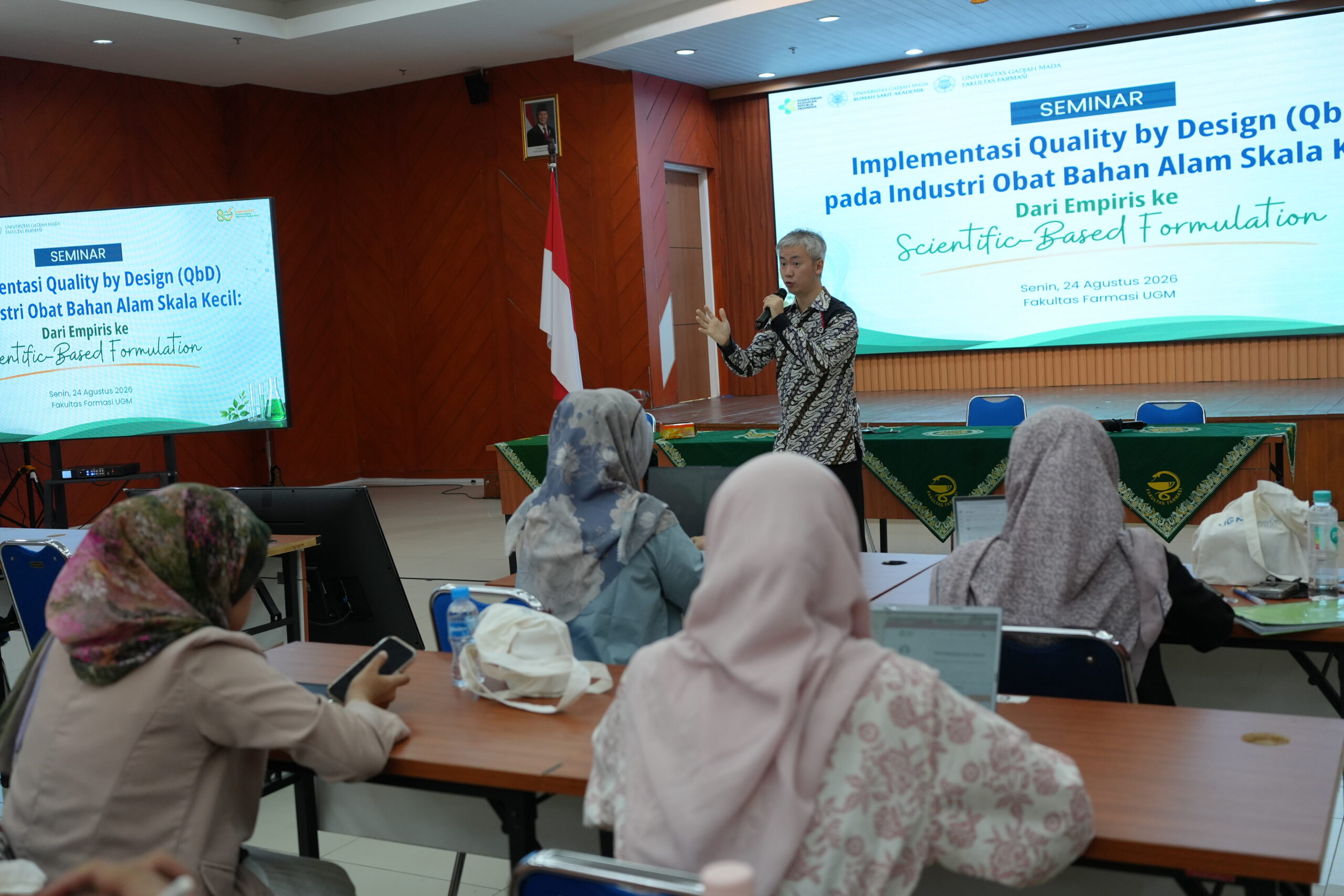
Yogyakarta, August 24, 2026 – The Faculty of Pharmacy, Universitas Gadjah Mada (UGM), held a hybrid seminar entitled “Implementation of Quality by Design (QbD) in Small-Scale Natural Medicine Industries: From Empirical to Scientific-Based Formulation” on Monday (24/8). The event served as a platform for academics, industry practitioners, regulators, and students to strengthen their understanding and application of science-based approaches in the development of natural medicine products.
The utilization of natural medicines in Indonesia is currently undergoing a transition from cultural heritage, which has largely relied on empirical knowledge, toward modern healthcare commodities developed through scientific-based approaches. Along with the growing global back-to-nature trend, the natural medicine industry holds significant economic potential. However, small-scale industries continue to face challenges due to the high variability of natural raw materials, which can affect consistency in quality across production batches. This condition highlights the importance of shifting the manufacturing paradigm from a Quality by Testing approach, which focuses on quality testing at the end of the production process, toward a Quality by Design (QbD) approach that builds quality into the product from the earliest stages of development. Through QbD, formulation development is conducted based on an understanding of the relationship between material characteristics, process parameters, and product quality attributes, thereby minimizing the risk of production failure while improving process efficiency.
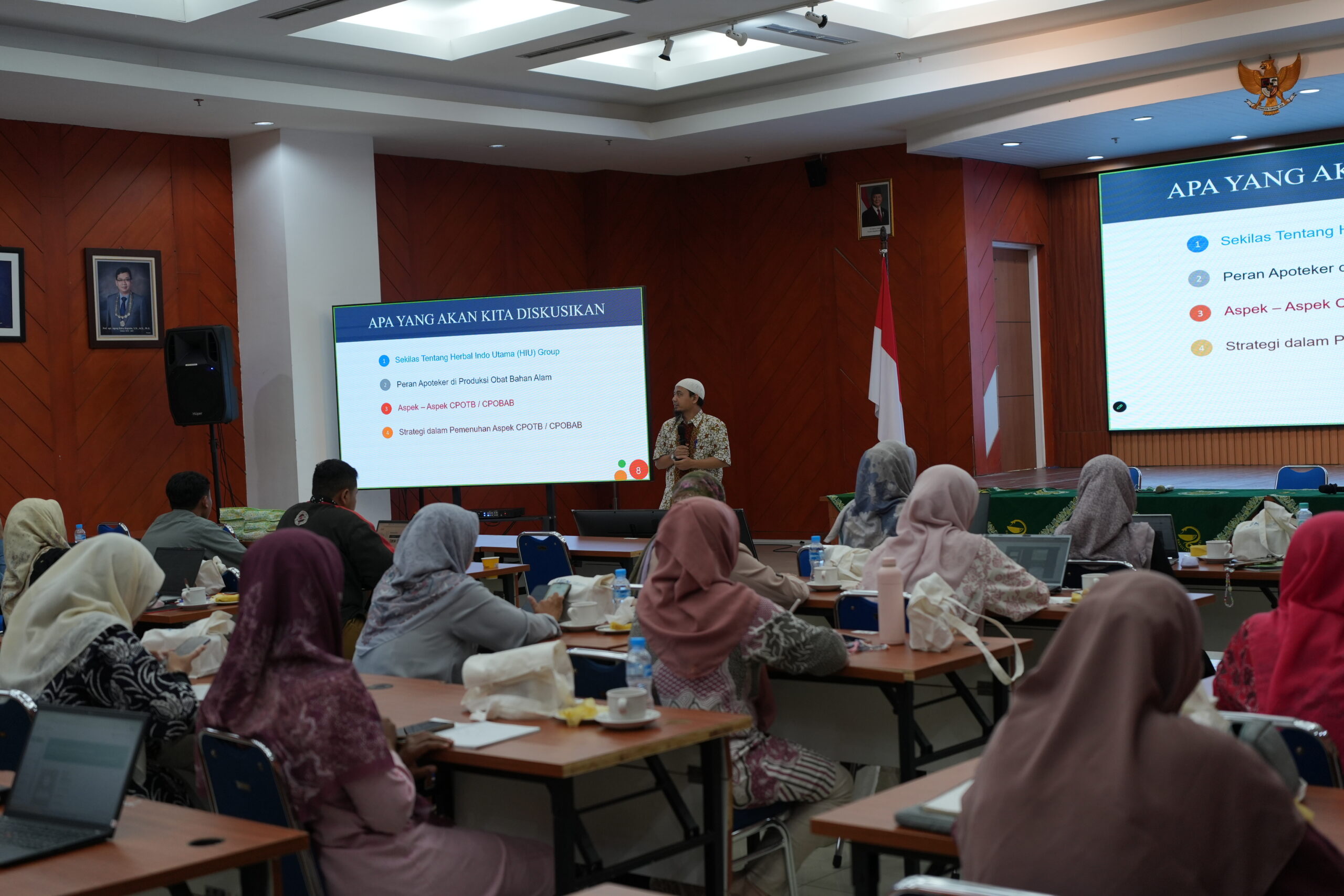
The seminar was organized to introduce QbD as a relevant approach for bridging empirical formulation practices with scientific-based formulation. Participants were introduced to the concepts of Critical Quality Attributes (CQA), Critical Material Attributes (CMA), and Critical Process Parameters (CPP) as essential components in designing and controlling product quality from the development stage. In addition to discussing QbD concepts, the event covered Good Traditional Medicine Manufacturing Practices (CPOTB) regulations, the fundamentals of natural product formulation and incompatibility, as well as the principles and application of quality control for natural medicine products. To strengthen participants’ understanding, the seminar also featured case studies involving the identification of CQA and CMA, along with simple analyses in the development of QbD-based natural product formulations.
The event featured Jony Yuwono, MBA, Chairman of the Indonesian Herbal Medicine Entrepreneurs Association (GP Jamu), as the keynote speaker. His participation provided an industry perspective on the development and strengthening of the competitiveness of Indonesia’s herbal medicine and natural medicine industries, particularly in responding to demands for quality standardization and transformation toward science-based industries. The seminar also featured speakers from academia and industry. apt. Agus Santosa, S.Farm., Chair of the Traditional Medicine Special Interest Group of the Indonesian Pharmacists Association, delivered a presentation entitled “Building a Quality-Based Traditional Medicine Industry: Integrating Field Practices and CPOTB Compliance.” From the UGM Faculty of Pharmacy, Prof. Dr. apt. Teuku Nanda Saifullah Sulaiman, M.Si., Head of the UGM Pharmaceutical Technology Laboratory, presented on the Implementation of QbD in Natural Product Formulation. Meanwhile, Dr.Eng. apt. Khadijah, M.Si., a lecturer at the UGM Pharmaceutical Technology Laboratory, discussed Natural Product Formulation and Incompatibility, while apt. Farida Nur Aziza, S.Farm., MGMP, a lecturer at the UGM Pharmaceutical Technology Laboratory, delivered a presentation on Quality Control of Natural Product Products.
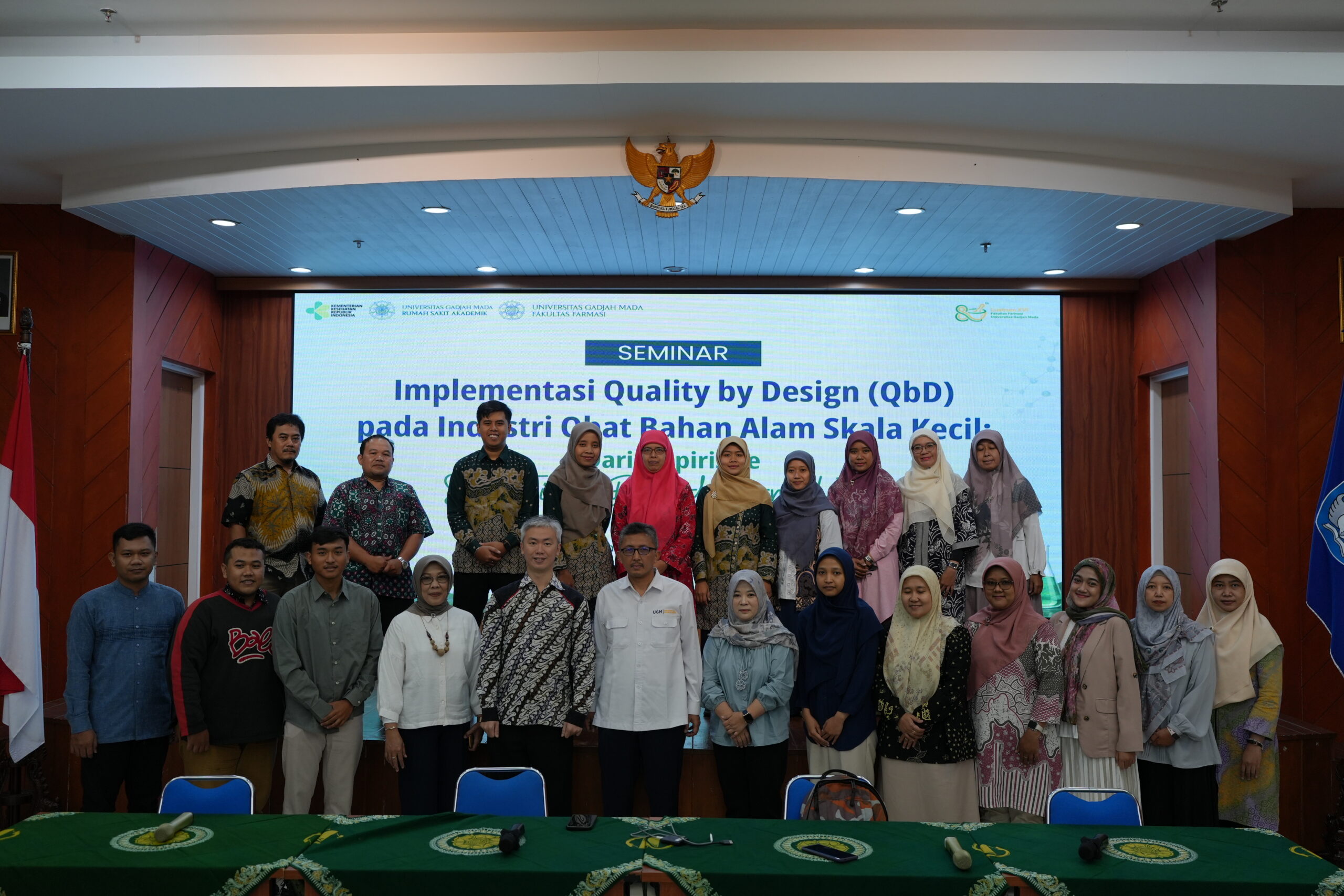
The seminar targeted various stakeholders involved in the development of natural medicines, including Micro Traditional Medicine Enterprises (UMOT) and Small Traditional Medicine Industries (UKOT), academics, pharmacy students, pharmaceutical and natural medicine industry practitioners, and regulators. Through this event, participants were expected not only to gain conceptual understanding but also to apply QbD principles in the practical development and quality control of natural medicine products. The seminar also contributed to the achievement of the Sustainable Development Goals (SDGs), particularly SDG 3: Good Health and Well-Being through strengthening the quality, safety, and development of natural health products; SDG 4: Quality Education through capacity building for academics, students, and practitioners; SDG 8: Decent Work and Economic Growth through strengthening the competitiveness of small-scale natural medicine industries; SDG 9: Industry, Innovation and Infrastructure through the application of innovation and science-based approaches in formulation processes; and SDG 17: Partnerships for the Goals through collaboration among higher education institutions, industry, and stakeholders in developing high-quality and sustainable natural medicine products.