Yogyakarta, 27 July 2026 – A team of students from Universitas Gadjah Mada (UGM) participating in the 2026 Student Creativity Program in Exact Research (PKM-RE), known as Team ChewMelo, has developed an innovative functional chewing gum formulated with erythritol and nano-fluorapatite (nFAp) to support oral health. The innovation utilizes brown algae as a source of alginate, which acts as both a reducing and capping agent in the green synthesis of nano-fluorapatite, while erythritol serves as a tooth-friendly sweetener that is also well tolerated by the digestive system.
Unlike conventional chewing gum, this product is designed as a delivery system for active ingredients that may help promote tooth enamel remineralization. Nano-fluorapatite provides calcium (Ca), phosphate (P), and fluoride (F) ions, three essential components for restoring minerals lost during the demineralization process. Meanwhile, erythritol has been shown to inhibit the growth of bacteria responsible for dental caries, offering dual benefits for maintaining oral health.
Achmad Musa Nurhadi, leader of Team ChewMelo, explained that the innovation was inspired by the high prevalence of dental caries in Indonesia, particularly among adolescents and young adults. According to him, the widespread occurrence of dental caries highlights the need for preventive approaches that are both appealing and easy to incorporate into daily life.
“We wanted to develop a solution that fits naturally into people’s daily habits. Chewing gum is a product that many young people enjoy and consume regularly, making it a practical vehicle for delivering active ingredients that support oral health,” Achmad said.
To evaluate the effectiveness of the functional chewing gum, the team conducted antibacterial testing at the Microbiology Laboratory of the UGM Faculty of Pharmacy. Preliminary results demonstrated a reduction in the growth of Streptococcus mutans, the primary bacterium responsible for dental caries. These findings indicate that the formulation has the potential to help control the growth of cariogenic bacteria in the oral cavity.
In addition, remineralization testing was carried out at the Materials and Manufacturing Laboratory of the UGM Vocational College using bovine teeth as a research model. Initial findings showed increased enamel hardness after seven days of exposure to the chewing gum eluate, as well as the ability to maintain enamel hardness following a pH cycling process that simulated acidic challenges in the oral environment.
“These findings suggest that the chewing gum not only has the potential to inhibit the growth of bacteria that cause dental caries but also supports the tooth remineralization process,” Achmad said.
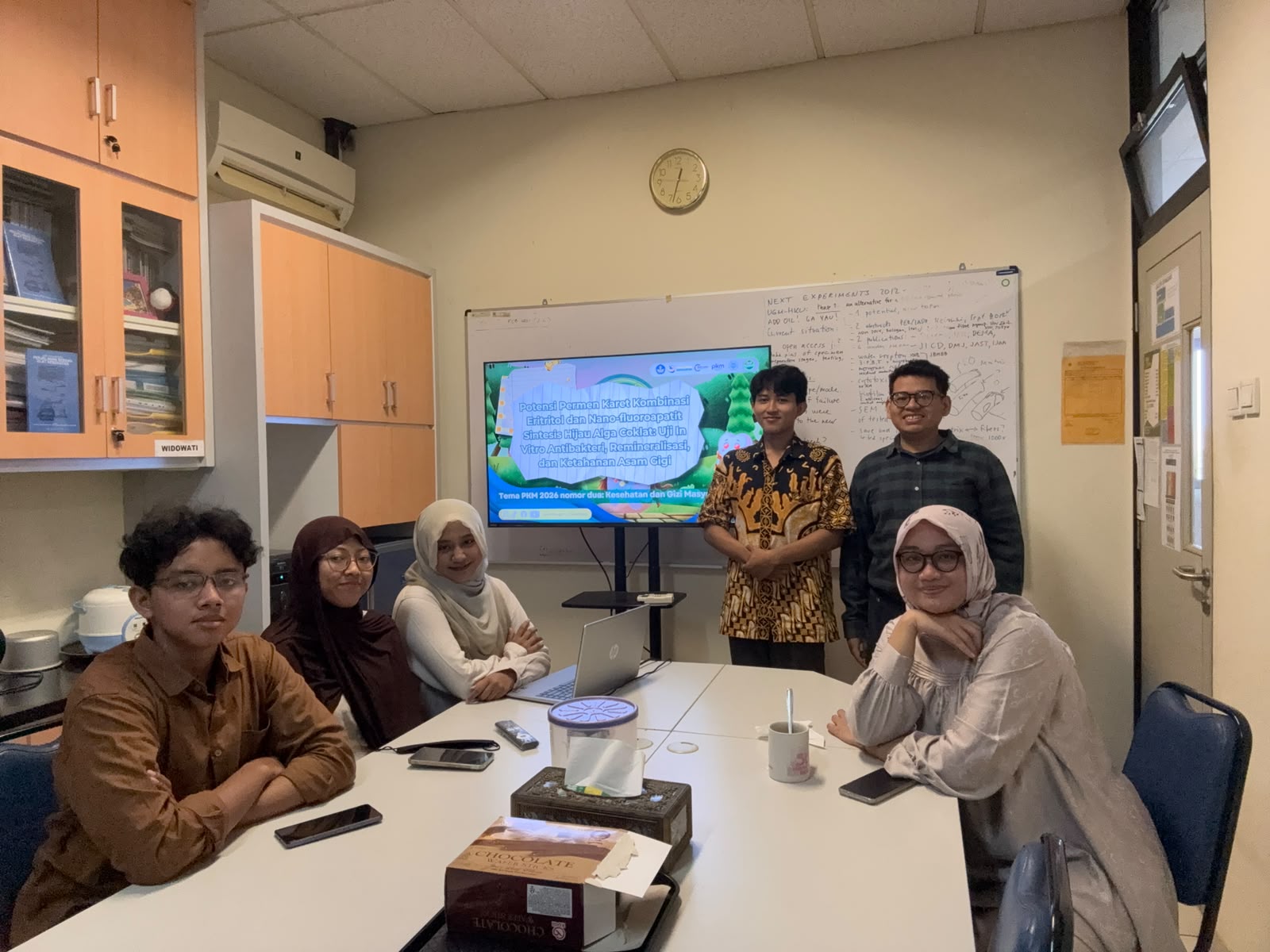
Team ChewMelo consists of Achmad Musa Nurhadi (Dentistry, 2024), Dimar Raihan Ganendra Putra (Pharmacy, 2024), Fajar Sindu Aji (Medicine, 2025), Najwa Laili Fajri (Chemical Engineering, 2024), and Tsabita Puan Najla (Dentistry, 2024). Supervised by Dr. drg. Dyah Anindya Widyasrini, MDSc, the research is titled “The Potential of Erythritol Chewing Gum Combined with Green-Synthesized Brown Algae Nano-fluorapatite: An In Vitro Study of Antibacterial Activity, Remineralization, and Acid Resistance of Tooth Enamel.”
Throughout the development process, the team carried out a series of stages, including the green synthesis of nano-fluorapatite, material characterization, chewing gum formulation, texture evaluation, and biological activity testing. One of the main challenges was producing a chewing gum that remained elastic and comfortable to chew without compromising the effectiveness of its active ingredients.
The team is currently refining the research by conducting further studies on the release of calcium, phosphate, and fluoride ions to better evaluate the product’s remineralization potential. Through this innovation, they hope to introduce a practical preventive oral healthcare product based on locally sourced materials while contributing to the advancement of dental health technology in Indonesia as they prepare for the 2026 National Student Scientific Week (PIMNAS).
The innovation also reflects Universitas Gadjah Mada’s commitment to advancing the Sustainable Development Goals (SDGs). By promoting preventive oral healthcare, the research contributes to SDG 3 (Good Health and Well-Being). Its application of green synthesis and the development of innovative biomaterials support SDG 9 (Industry, Innovation and Infrastructure), while the responsible use of locally sourced natural materials aligns with SDG 12 (Responsible Consumption and Production). Furthermore, the sustainable utilization of brown algae as a marine resource contributes to SDG 14 (Life Below Water) by encouraging value-added and environmentally responsible use of marine biodiversity.
Author: Dimar Raihan Ganendra dan Achmad Musa Nurhadi
Editor: Fathul Muin | Photo: Tim ChewMelo PKM-RE 2026