Yogyakarta, April 30, 2026 – The Faculty of Pharmacy, Universitas Gadjah Mada (UGM), through its Community Service Program, initiated an activity entitled “Strengthening Scientific Literacy and Community Capacity in Characterizing the Quality, Authenticity, and Biological Activity of Honey as a Health Agent.” This program is part of a community development initiative based on applied research and community empowerment with international collaboration. The program is led by Prof. Dr. rer. nat. apt. Nanang Fakhrudin together with an interdisciplinary team from the Faculty of Pharmacy and the Faculty of Biology UGM.
This activity aims to improve public scientific literacy, particularly among beekeepers, honey producers, distributors, and the general community, in understanding, evaluating, and maintaining the quality and authenticity of honey based on scientific evidence. Honey, as a natural product widely used as a nutraceutical and health-promoting agent, has high economic value. However, it still faces challenges such as limited understanding among business actors regarding quality standards, issues of adulteration (fraudulent practices), and scientific methods for detecting honey authenticity.
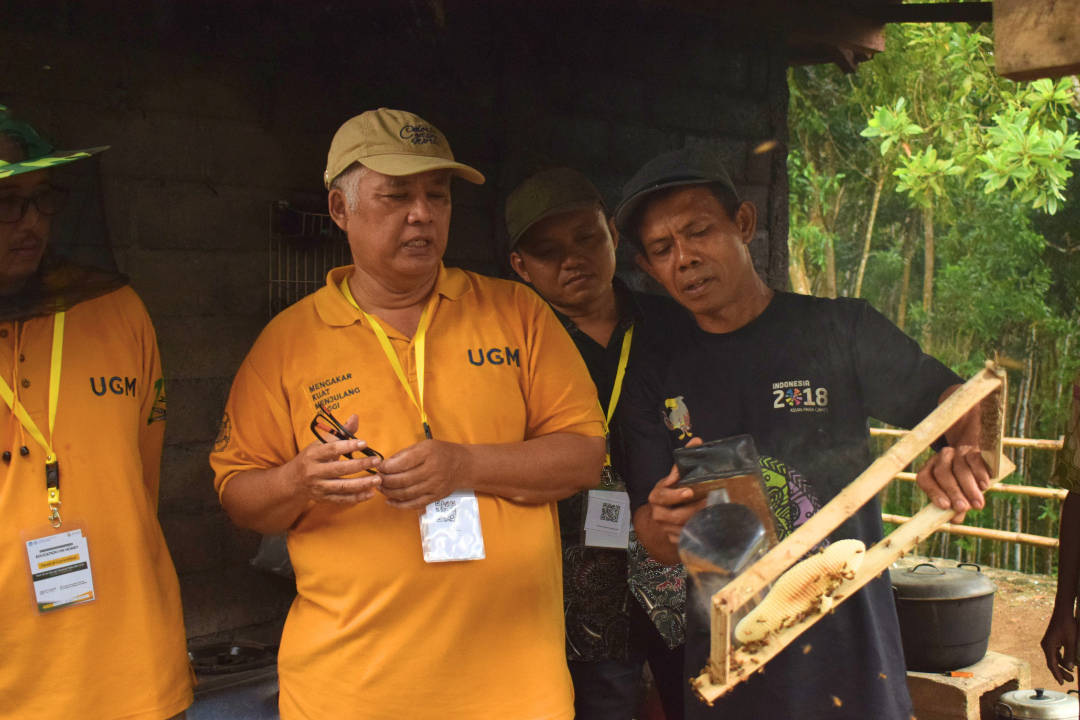
The program was carried out on Thursday, April 30, 2026, through scientific seminars, interactive workshops, field visits to beekeepers in Kedungpoh Village, Nglipar District, Gunungkidul Regency, and quality and authenticity testing of honey samples by an independent laboratory. Target partners included the Sari Alami Honey Bee Forest Farmer Group, the Indonesian Beekeeping Association (API), ILMI (Inspirator Lebah Madu Indonesia), honey producers, and communities concerned with the quality of local honey. Participants also received presentations on the physicochemical characteristics of honey, the biological benefits of honey, issues related to fake honey, and authenticity identification methods based on modern laboratory technology.
The activity was further strengthened through international collaboration with the Faculty of Pharmacy, University of Cyberjaya, Malaysia, with Professor Dr. Gan Siew Hua serving as the main international partner in delivering presentations on honey quality and authenticity to participants. In addition, information regarding the role of beekeepers and packaging processes in producing high-quality honey was presented by Drs. Hari Purwanto, M.P., Ph.D. from the Faculty of Biology UGM. This collaboration is expected to strengthen knowledge transfer, open opportunities for further research, and support the development of stronger and globally integrated scientific standards for Indonesian honey quality.
The outputs of this program include improving participants’ literacy through pre-tests and post-tests, preparing educational modules or science-based pocketbooks on honey characterization, reports on honey authenticity testing, media publications, policy briefs, and strengthening national and international collaborative networks. This program also serves as a tangible form of translating laboratory research results into community benefits so that scientific knowledge can be directly felt by business actors and local communities.
Through this program, the Faculty of Pharmacy UGM reaffirms its commitment to supporting the Sustainable Development Goals (SDGs), particularly SDG 2 (Zero Hunger), SDG 3 (Good Health and Well-being), and SDG 17 (Partnerships for the Goals). Strengthening community capacity in maintaining the quality of natural products such as honey is expected to support public health, increase local economic value, and strengthen global collaboration in scientific development and sustainable community empowerment.
Writer: Tiara | Editor: Fathul | Photo: Gilang