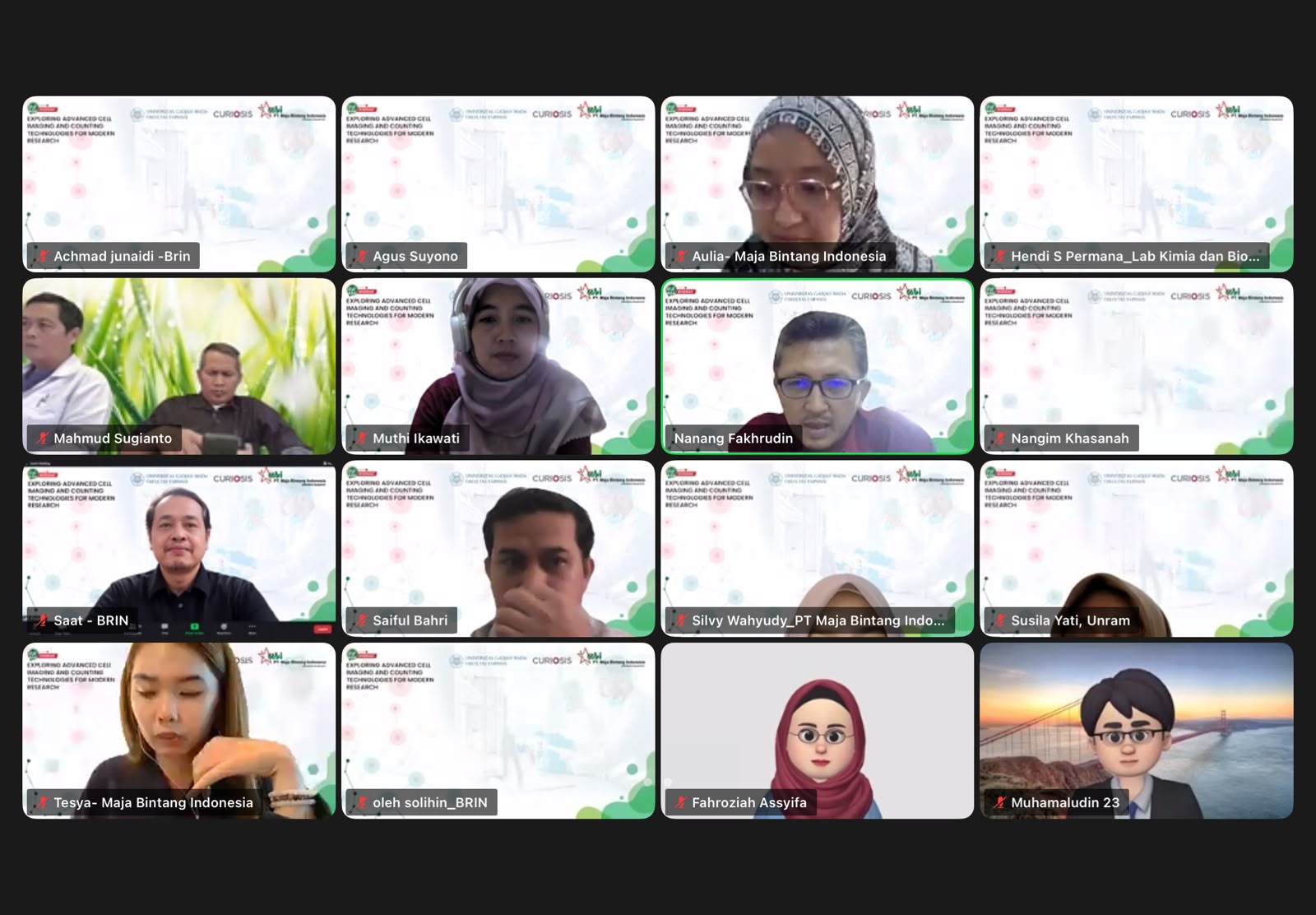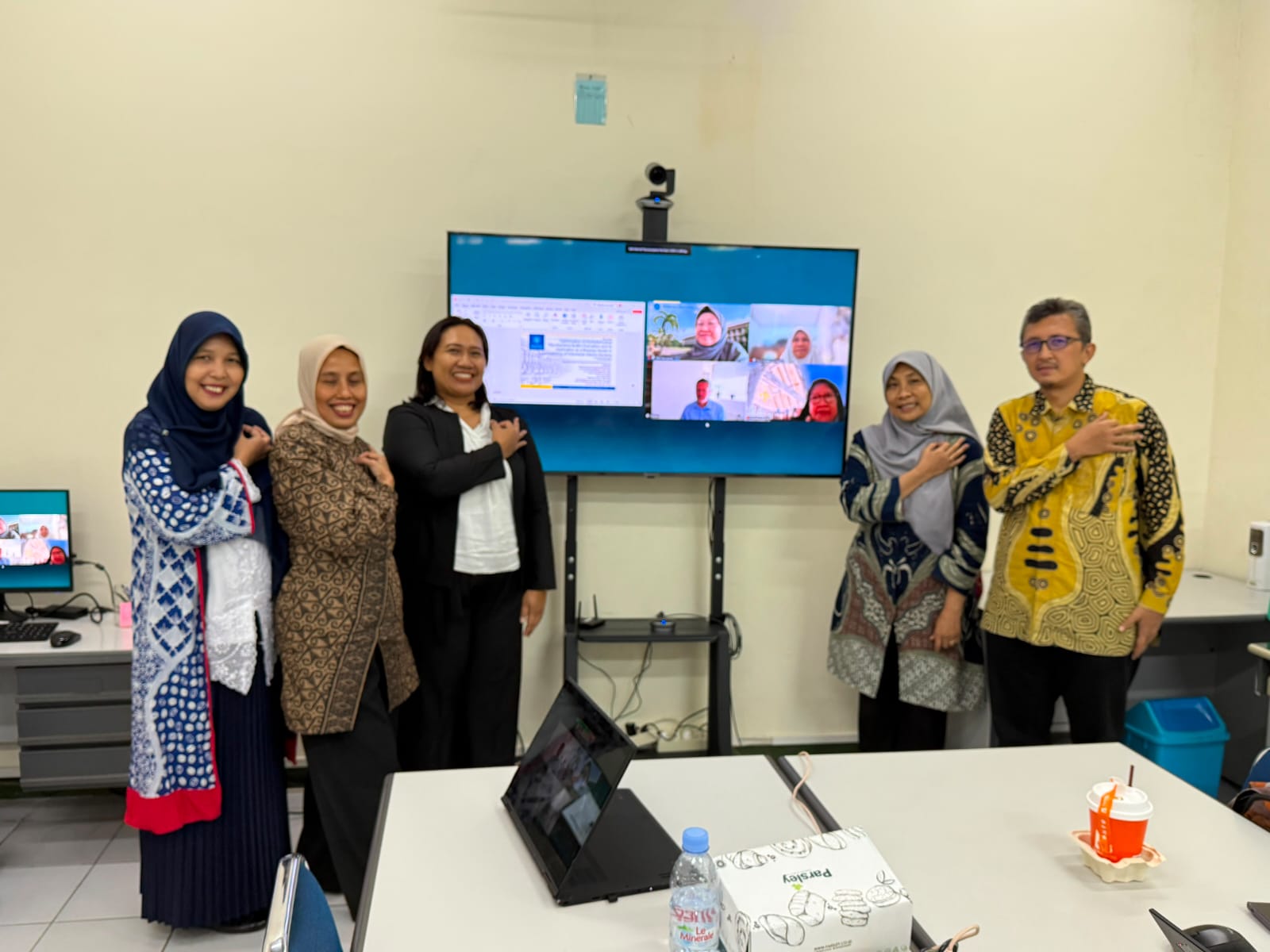
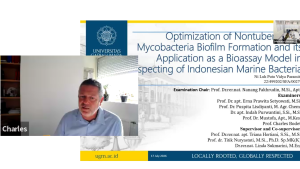
Yogyakarta, July 24, 2026 — The Doctoral Program in Pharmaceutical Sciences, Faculty of Pharmacy, Universitas Gadjah Mada (UGM), held a closed-door dissertation defense for Ni Luh Putu Vidya Paramita on Friday, July 17, 2026. The defense was held in a hybrid format in Multimedia Room I, Unit IX of the UGM Faculty of Pharmacy Graduate School Building. During the defense, Vidya defended her dissertation titled “Optimization of Nontuberculous Mycobacteria (NTM) Biofilm Formation and Its Application as a Bioassay Model in Bioprospecting of Indonesian Marine Bacteria.”
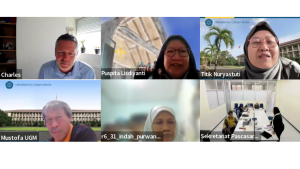
In this closed-door examination, Vidya invited an international examiner: Professor Charles Bodet from the Faculty of Health, Laboratory of Inflammation, Epithelial Tissues, and Cytokines, at the University of Poitiers, France. The participation of an international examiner provided a broader scientific perspective while strengthening the academic atmosphere and international network within the Doctoral Program in Pharmaceutical Sciences at the Faculty of Pharmacy, UGM.
The examination was led by Prof. Dr.rer.nat. Nanang Fakhrudin, M.Si., Apt., as head of the examining committee. The thesis advisory committee consisted of Prof. Dr.rer.nat. apt. Triana Hertiani, S.Si., M.Si., from the Faculty of Pharmacy at UGM, as thesis advisor; Prof. dr. Titik Nuryastuti, M.Si., Ph.D., Sp.MK(K), from the Faculty of Medicine, Public Health, and Nursing (FK-KMK) at UGM, as co-supervisor I; and Dr.rer.nat. Linda Sukmarini, M.Eng., from the Center for Applied Microbiology Research, National Research and Innovation Agency (BRIN), as co-advisor II.
The other panel of examiners consisted of Prof. Dr. apt. Erna Prawita Setyowati, M.Si., and Dr. apt. Indah Purwantini, S.Si., M.Si., from the Faculty of Pharmacy at UGM; Prof. Dr. Puspita Lisdiyanti, M.Agr.Chem., from the BRIN Center for Biosystematics and Evolution Research; and Prof. Dr. apt. Mustofa, M.Kes., from the Faculty of Medicine and Public Health, UGM.
This dissertation research is closely linked to the scientific ecosystem of the Indonesian Biofilm Research Collaboration Center (IBRCC), or the Biofilm Research Collaboration Center (PKR), which serves as a platform for collaborative biofilm research involving researchers from various institutions. All members of the dissertation committee, along with Prof. Puspita Lisdiyanti and Prof. Mustofa, who served as examiners, are part of the Biofilm Research Collaboration Center (PKR). The involvement of these researchers demonstrates the ongoing collaboration between UGM and BRIN in advancing biofilm research in Indonesia.
During the defense, the doctoral candidate presented the background, methodology, results, novelty, and scientific contributions of his research. The presentation was followed by a question-and-answer session and a scientific discussion with the examination committee.
Developing an NTM Pellicle Biofilm Model for Screening Active Extracts
Vidya’s research addresses the issue of infections caused by nontuberculous mycobacteria (NTM), a group of bacteria commonly found in the environment, including in water and plumbing systems. NTM’s ability to form biofilms is one of the factors that contributes to their persistence in the environment and increases their tolerance to antibiotics and disinfectants. These conditions make NTM biofilm infections difficult to eradicate.
To this day, methods for forming and testing NTM biofilms have not been fully standardized. This situation is due to the diversity of NTM species and the variety of methods used to form biofilms, even among strains of the same NTM species. In the environment, NTMs are also capable of forming pellicle biofilms, including in piping systems and under nutrient-limited conditions..
The pellicle biofilm is one of the physiologically important NTM biofilm phenotypes and is relevant to environmental conditions. Although its characteristics have been extensively described, research that adapts NTM pellicle biofilm formation into a standardized microtiter plate assay for assessing antibiofilm potential remains limited.
Based on these issues, this study focuses on optimizing the conditions for the formation of NTM biofilm pellicles to produce a stable and reproducible model. The NTM used in this study is part of the infectious biobank collection of the Department of Microbiology, Faculty of Medicine and Public Health, Universitas Gadjah Mada.
The optimized biofilm model was then applied as a bioassay method in bioprospecting activities targeting Indonesian marine bacteria. These activities aim to explore metabolites produced by marine bacteria as potential sources of antimicrobial and antibiofilm compounds.
In her research, Vidya developed a micro-scale pellicle biofilm model using a 96-well microplate. A number of parameters were evaluated, including medium type, inoculum density, incubation time, culture volume, and biofilm formation methods.
The formation test procedure includes collecting a medium containing planktonic cells, washing the biofilm, staining it with crystal violet, and collecting the stained supernatant using a micropipette. These parameters were optimized to obtain a stable biofilm biomass that can be measured consistently.
The resulting model was then used to screen marine bacterial extracts originating from Lombok, Indonesia, and stored in the BRIN collection. From this screening process, extract A21-064 showed potential activity. This extract was produced by marine bacterium strain SPL 22-64, which was identified as closely related to Nocardia sp.
Analysis of the metabolite profile using liquid chromatography–high-resolution mass spectrometry (LC-HRMS) revealed the presence of several compounds that were putatively identified as cyclic dipeptides from the diketopiperazine group.
These findings indicate that the development of an NTM biofilm model is not only important for understanding the characteristics of biofilm formation, but also has the potential to support the screening of Indonesia’s marine biological resources in the search for new anti-biofilm compound candidates against NTM.
Supporting the Achievement of the Sustainable Development Goals
This research contributes to the achievement of the Sustainable Development Goals (SDGs), particularly SDG 3 on Good Health and Well-being. This contribution is realized through the development of a method for screening candidate anti-mycobacterial and anti-biofilm compounds that have the potential to support future efforts to treat NTM-related infections.
The development of a micro-scale bioassay model and a protocol for pellicle biofilm formation is also aligned with SDG 9 on Industry, Innovation, and Infrastructure. The model developed has the potential to support a more efficient screening process for extracts in larger quantities, while also opening up opportunities to further develop this method into an innovation that can be utilized in future research.
The exploration of Indonesian marine bacteria in this study is also aligned with SDG 14 on Marine Ecosystems, particularly in promoting the responsible and sustainable use of marine biodiversity to generate knowledge and identify candidate bioactive compounds with health benefits.
Meanwhile, the involvement of researchers from UGM, BRIN, and the University of Poitiers, as well as the research’s connection to the PKR Biofilm project, reinforces the implementation of SDG 17 on Partnerships for the Goals. This collaboration brings together expertise in the fields of pharmacy, microbiology, biofilms, and bioprospecting to address health issues through a cross-disciplinary and cross-institutional approach.
Strengthening Research Collaboration and the Internationalization of Doctoral Education
Professor Charles Bodet’s involvement as an international examiner reflects the commitment of the Doctoral Program in Pharmaceutical Sciences to improving academic quality and strengthening the internationalization of doctoral education. The presence of scholars from foreign institutions allows doctoral students’ research to be evaluated from a broader perspective and in accordance with international scientific standards.
The involvement of these international reviewers also expands the scientific network that has been established through collaboration among researchers in the Biofilm Research Program (IBRCC). The convergence of national research networks and international academic perspectives opens opportunities for the advancement of NTM biofilm research through cross-institutional and cross-national collaboration.
In addition to providing feedback on the methodology and interpretation of the research findings, the discussion during the examination also addressed the biological relevance of the biofilm model that was developed, the study’s limitations, and opportunities for its future development.
This research has resulted in two publications in reputable international journals, one presentation at an international seminar, and a draft protocol that is planned to be filed for a patent. The protocol describes a method for forming a Mycobacterium fortuitum pellicle biofilm on a 96-well microplate.
This protocol represents an advancement in research because it enables the formation of a pellicle biofilm in a shorter time compared to several previously published methods for the same NTM strain. In addition, the method uses micro-scale incubation conditions, which has the potential to support the efficient screening of a larger number of extracts.
Following the presentation, discussion, and examination process, Ni Luh Putu Vidya Paramita was declared to have passed and is entitled to receive a Doctoral degree in Pharmacy, having met all applicable academic requirements.
It is hoped that this success will contribute to the advancement of biofilm research, particularly in the development of NTM biofilm testing methods. This study also opens up opportunities for the responsible utilization of Indonesia’s marine bacterial diversity as a source of candidate antimycobacterial and antibiofilm compounds.
Through synergies in doctoral education, cross-institutional collaboration, and the development of innovations based on Indonesia’s biodiversity, this research is expected to strengthen the contribution of universities and research institutions in addressing health challenges at both the national and global levels.
Writer: Vidya | Photo: Vidya | Editor: Fathul