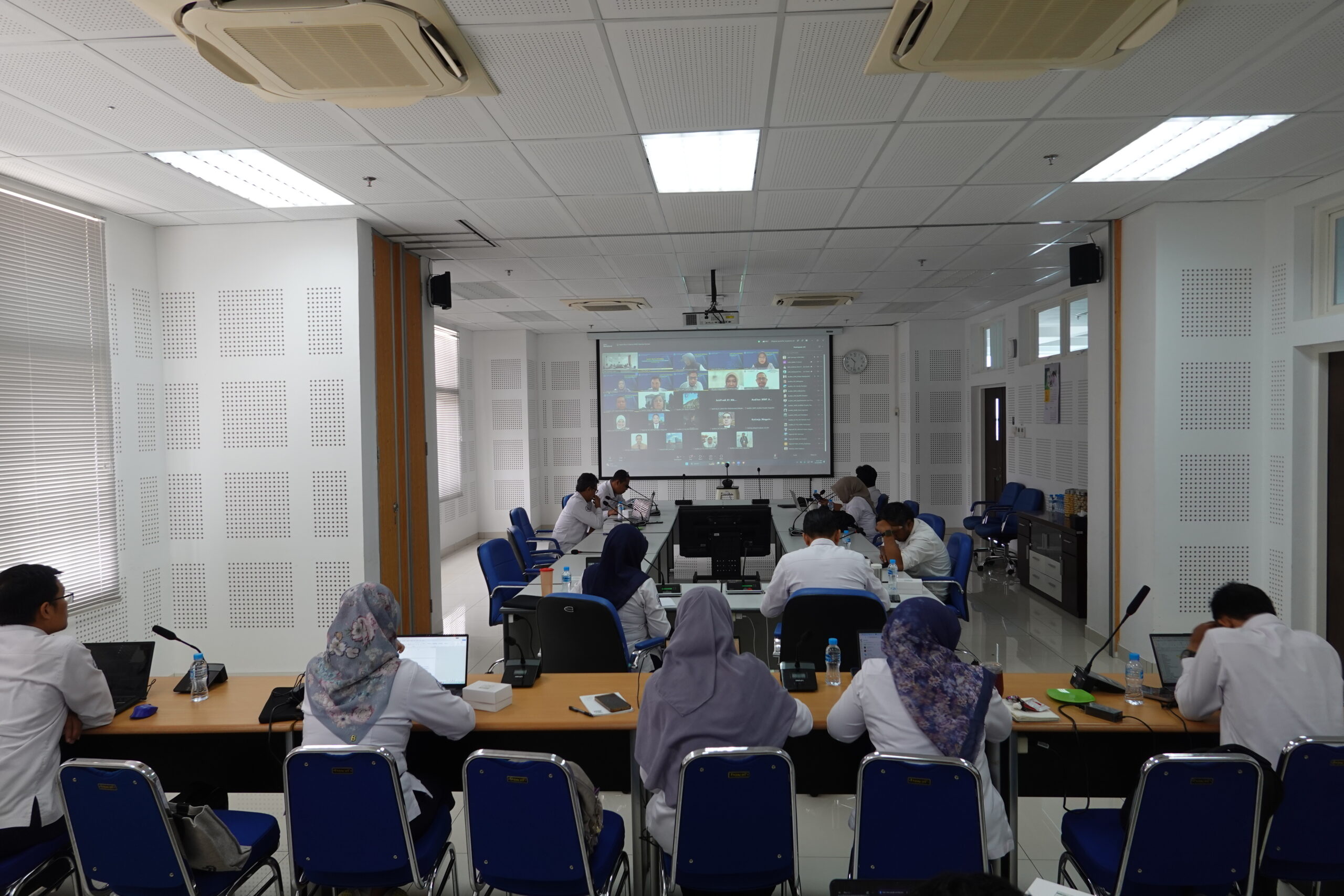
Yogyakarta, October 19, 2026 – The Faculty of Pharmacy at Gadjah Mada University officially held the 2026 Internal Quality Audit (AMI) to maintain and improve sustainable educational quality standards. This two-day event was held in a hybrid format on Monday, October 19, 2026, from 9:00 a.m. to 11:30 a.m. WIB, and Tuesday, October 20, 2026, from 8:00 a.m. to 12:00 p.m. WIB, in the Executive Conference Room (RSP) 707 on the 7th floor of the APSLC Building and via Zoom.
As a mandatory annual event, the AMI continues to be held consistently; this year’s event includes six academic programs: the Bachelor of Pharmacy program, the Professional Pharmacist Program (PSPA), the Master of Pharmaceutical Sciences (MIF), the Master of Pharmacy Management (MMF), the Master of Clinical Pharmacy (MFK), and the Doctor of Pharmaceutical Sciences (DIF).
The first day of the event opened with remarks by the Dean of the Faculty of Pharmacy, Universitas Gadjah Mada, Prof. Dr. apt. Abdul Rohman, M.Si., followed by a discussion session with the Study Program Management Units (UPPS). This session was also attended by the leadership of the UGM Faculty of Pharmacy, the Chairs and Secretaries of the study programs, as well as the heads of relevant units and administrative offices.
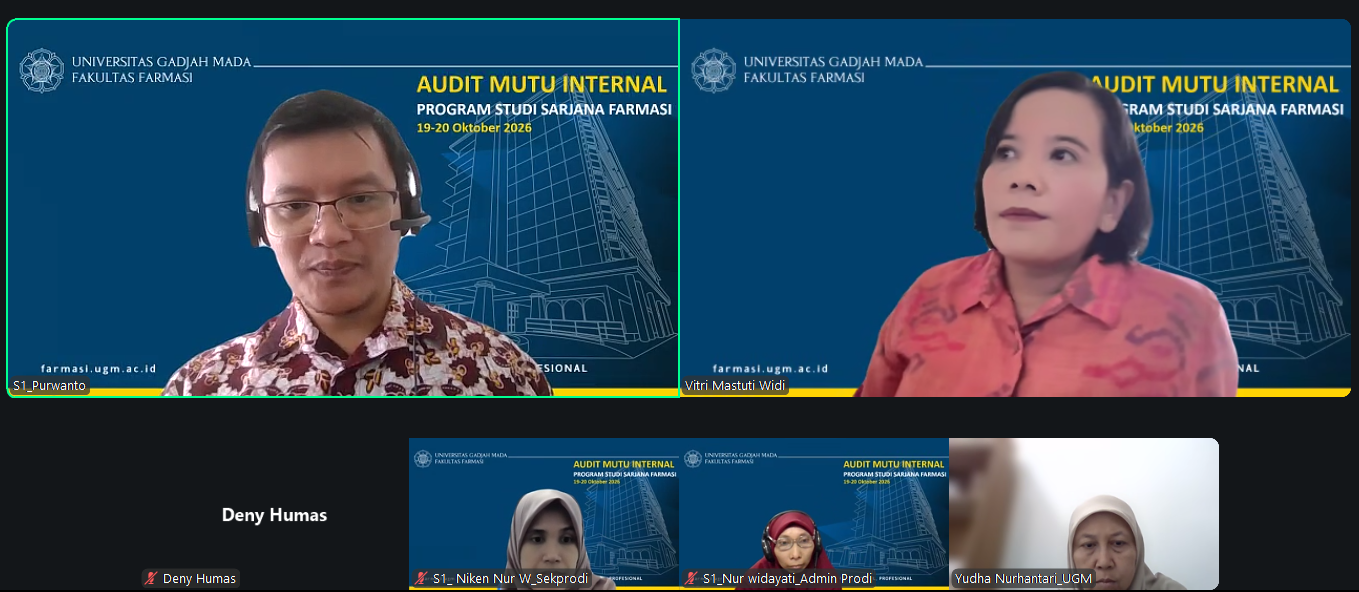
On the second day, the audit process was conducted entirely online and focused on a detailed analysis of the quality of each study program. This session involved a series of interviews and interactive discussions with key academic stakeholders, including study program administrators, faculty representatives, current students, and support staff, to obtain a comprehensive evaluation. To ensure the objectivity, depth, and accuracy of the evaluation, the Faculty of Pharmacy also deployed 12 experienced quality assurance auditors. These auditors were divided into six teams, each specifically assigned to audit a particular study program.
For the Faculty of Pharmacy, AMI is a tangible manifestation of the faculty’s commitment to supporting the achievement of the Sustainable Development Goals. The oversight of curriculum standards, facilities, and the academic ecosystem, which are evaluated in this audit, contributes to the achievement of SDG 4 on Quality Education. This ensures that all students at various levels of study have access to high-quality pharmaceutical education that is relevant to scientific advancements and the needs of society.
Furthermore, an institution’s openness to independent evaluation by auditors also reflects transparent, accountable, and participatory higher education governance. These reporting and quality assurance practices align with SDG 16 on Peace, Justice, and Strong Institutions in fostering strong educational institutions with high integrity.
Writer: Gilang | Documentation: Deny