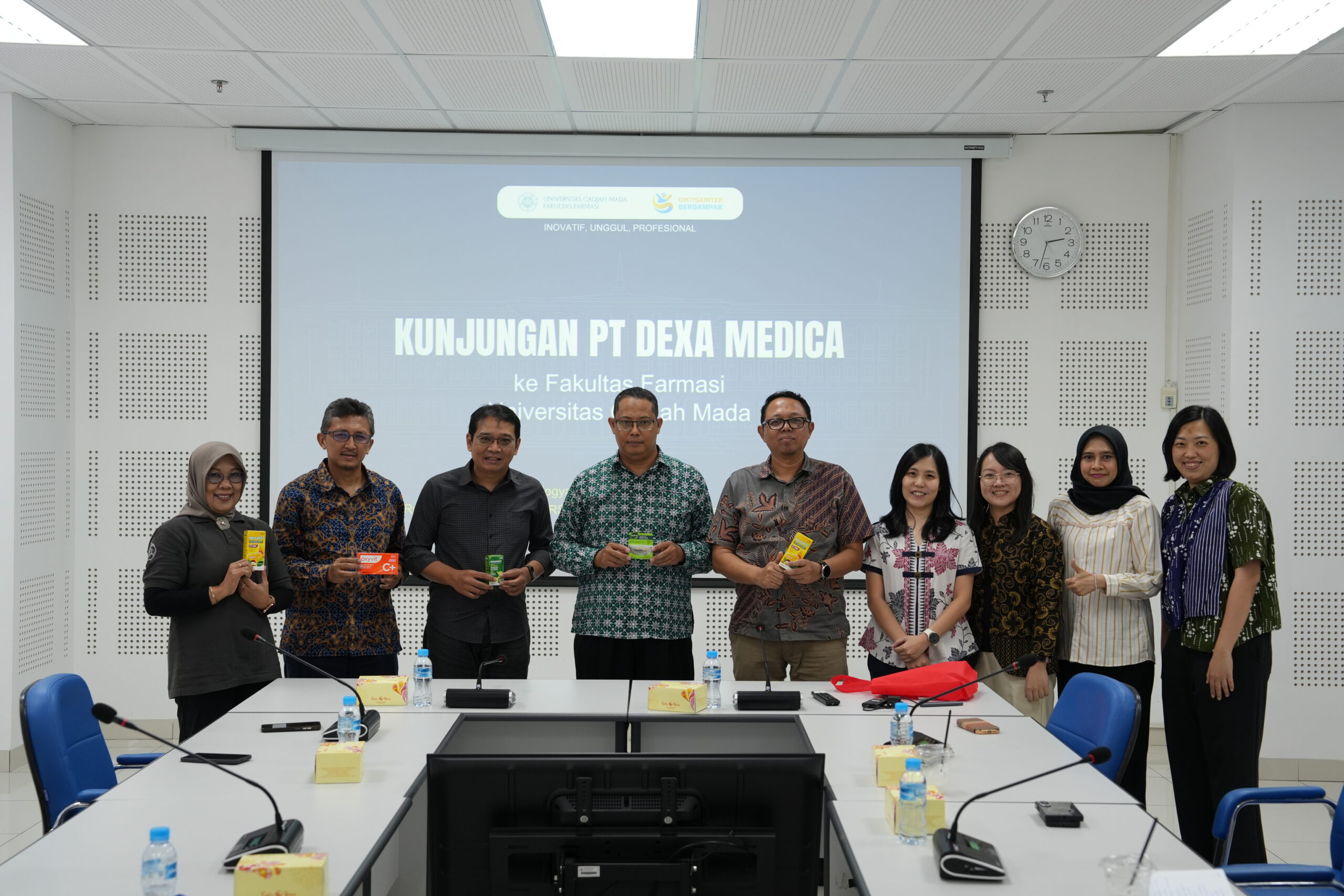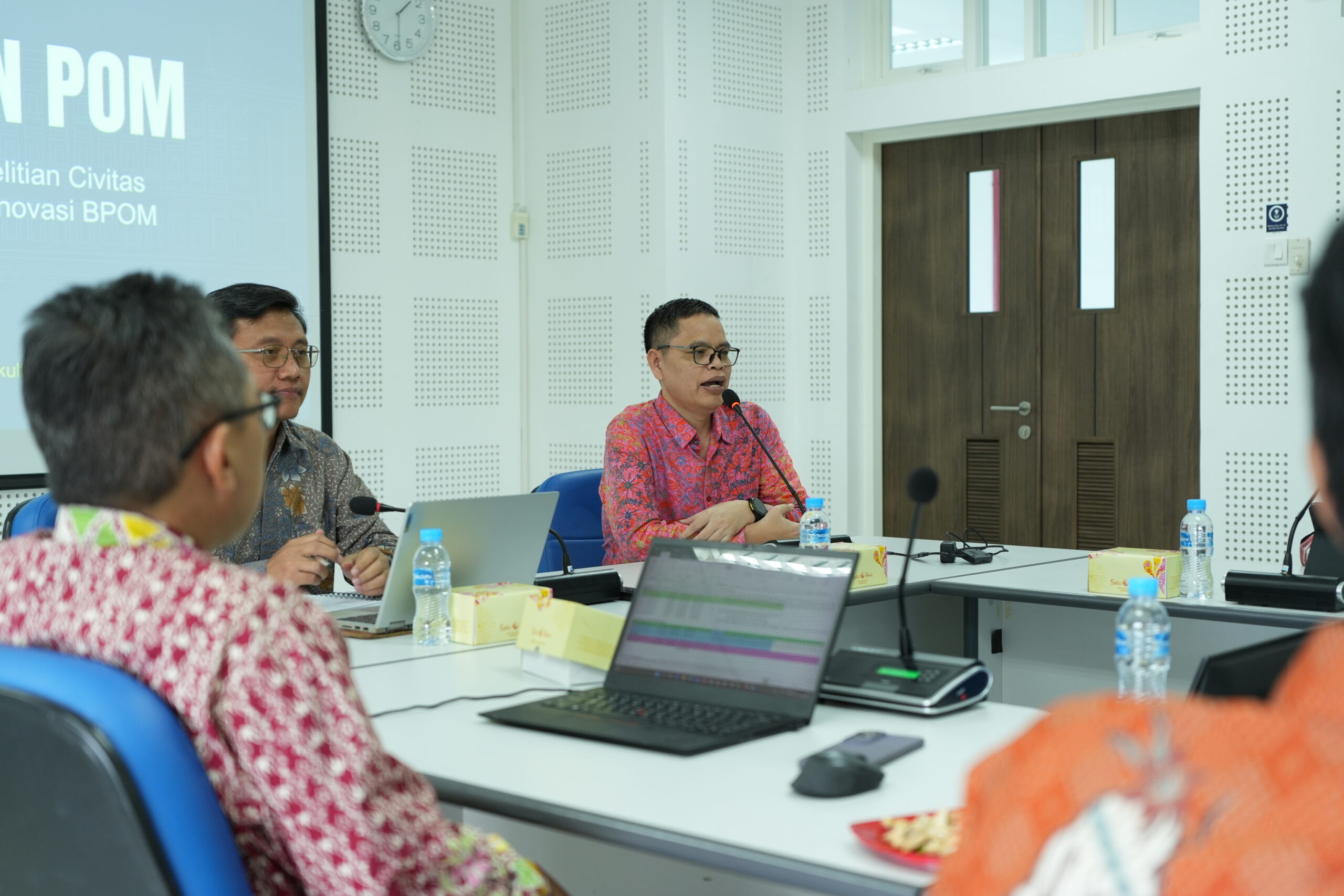
Yogyakarta, August 27, 2026 — The Faculty of Pharmacy at Gadjah Mada University (UGM) officially hosted a courtesy visit from the Indonesian Food and Drug Supervisory Agency (BPOM). This strategic meeting took place from 1:00 p.m. to 4:00 p.m. WIB in the Executive Conference Room on the 7th floor of the APSLC Building, Faculty of Pharmacy, UGM.
The discussion focused on two topics: strategies for the optimization of commercializing research outcomes from the UGM academic community, and the development of a model for herbal medicine literacy in Indonesia to ensure that the public receives accurate and safe information regarding the use of traditional medicine.
The meeting was attended by Prof. Dr. apt. Satibi, M.Si., Dean of the Faculty of Pharmacy at UGM; Prof. Dr.rer.nat. apt. Nanang Fakhrudin, M.Si., as Vice Dean for Research, Community Service, Collaboration, and Alumni Affairs; and Prof. Dr. apt. Nanang Munif Yasin, M.Pharm., as Vice Dean for Academic and Student Affairs, as well as several faculty members from the Faculty of Pharmacy at UGM.
Mr. apt. Mohammad Kashuri, S.Si., M.Farm. in his capacity as Deputy Director for the Supervision of Traditional Medicines, Health Supplements, and Cosmetics at the Indonesian Food and Drug Administration (BPOM RI), along with his delegation; Ms. apt. Ani Fatimah Isfarjanti, S.Si., M.H., as Head of the Yogyakarta Special Region POM Center, along with her delegation; and Dra. apt. Rr. Maya Gustina Andarini, M.Sc., as Senior Expert in Pharmaceutical and Food Supervision were also in attendance
During this meeting, Prof. Nanang Fakhrudin presented the latest developments in herbal-based drug innovations that have been researched and developed by the UGM Faculty of Pharmacy. The session then continued with a discussion with the BPOM. Several faculty members from the Faculty of Pharmacy who are involved in the development of herbal medicines also shared their perspectives during this discussion.
This event is certainly a tangible manifestation of the Faculty of Pharmacy’s contribution to the Sustainable Development Goals. The audience’s focus on the commercialization of innovative research directly supports the achievement of SDG 9 on Industry, Innovation, and Infrastructure. Meanwhile, the development of a regulatory framework and the promotion of herbal medicine literacy serve as key milestones in ensuring national health standards that align with SDG 3 on Good Health and Well-being. All of these strategic efforts are driven through close collaboration between academics and policymakers, in line with SDG 17 on Partnerships for the Goals.
Writer: Gilang | Editor: Fathul | Photo: Gilang