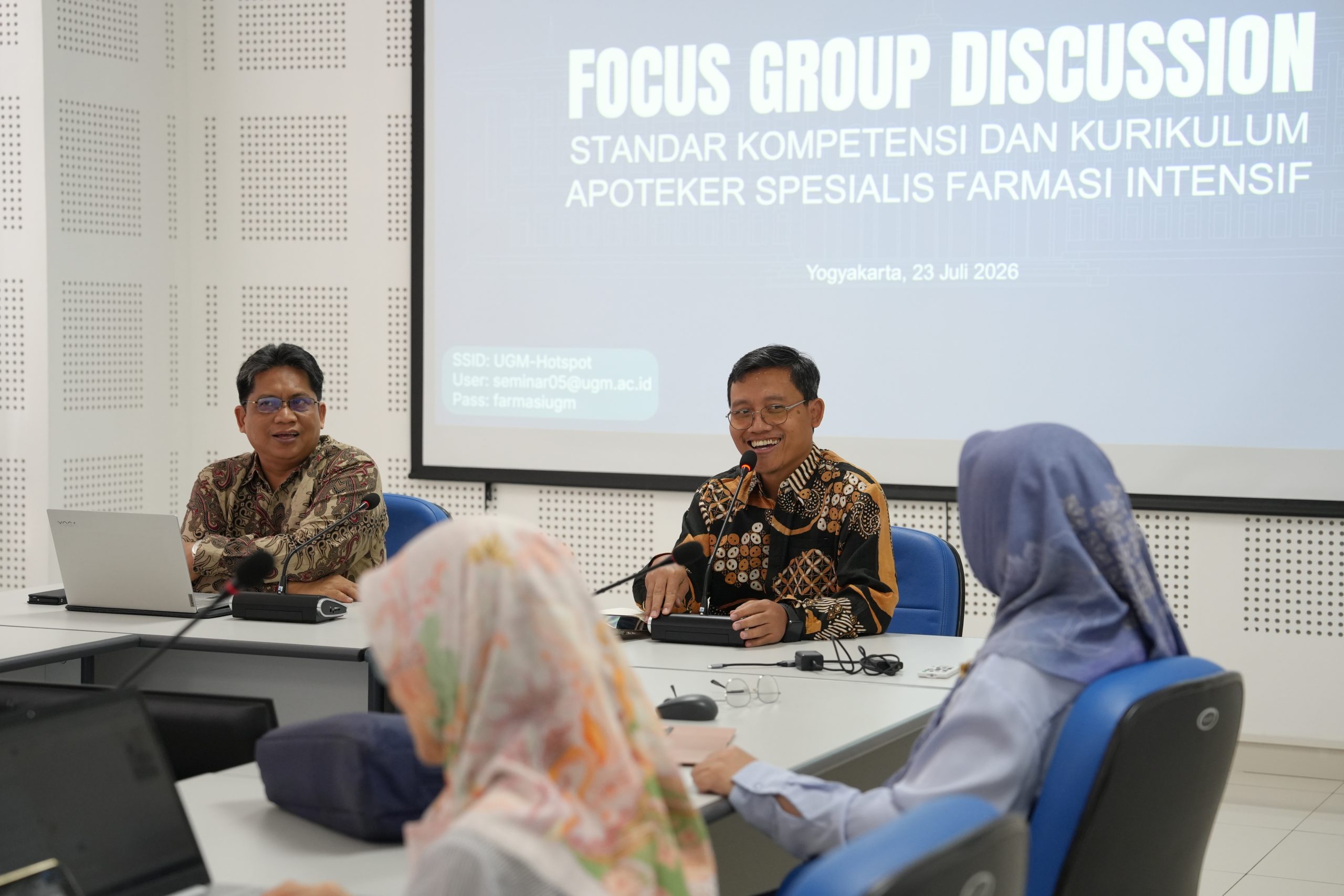
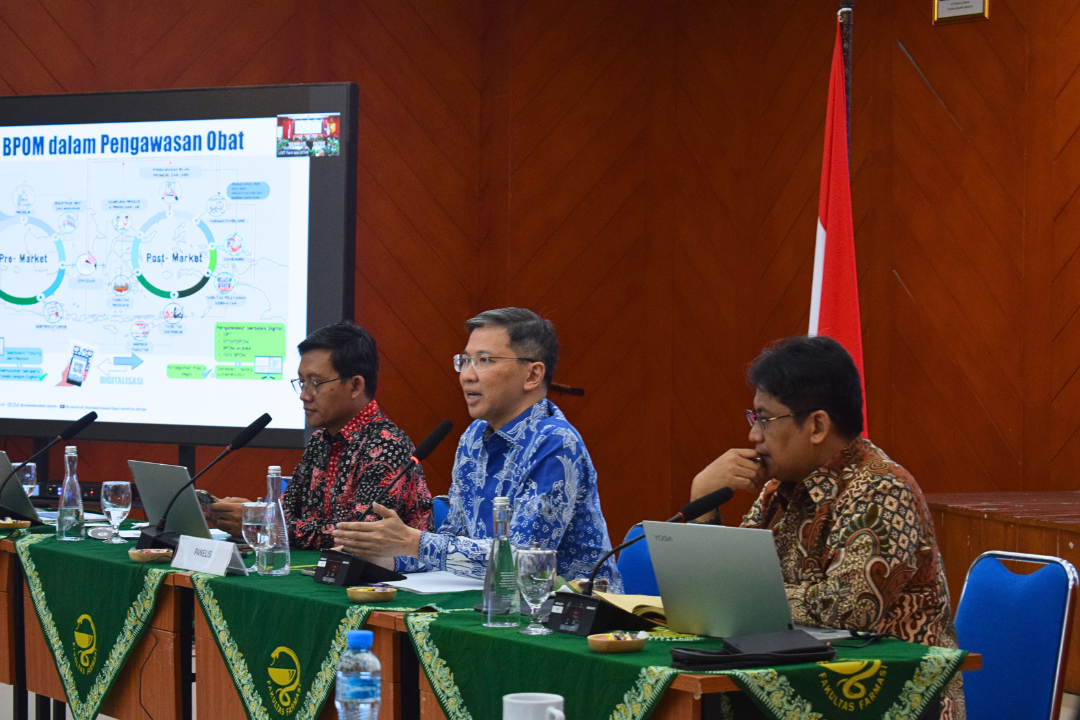
Yogyakarta, June 2, 2026 – The Faculty of Pharmacy, Universitas Gadjah Mada (UGM), organized a Focus Group Discussion (FGD) entitled “Implications of BPOM Regulation No. 5 of 2026 on the Distribution of Over-the-Counter and Limited Over-the-Counter Medicines through Non-Pharmacy Retail Facilities” on Tuesday (June 2) at the 8th Floor Auditorium of the APSLC Building, Faculty of Pharmacy UGM. Conducted in a hybrid format, the event brought together regulators, academics, practitioners, professional organizations, and stakeholders in the pharmaceutical sector to discuss the implementation of the latest regulation concerning medicine distribution in Indonesia.
The FGD was organized in response to the issuance of the Indonesian Food and Drug Authority (BPOM) Regulation No. 5 of 2026, which allows over-the-counter (OTC) and limited OTC medicines to be distributed not only through pharmaceutical facilities but also through hypermarkets, supermarkets, and minimarkets. The policy is considered to have the potential to improve public access to medicines, particularly in supporting self-medication practices. However, its implementation also requires careful attention to medicine safety, public education, and patient protection.
The discussion featured panelists from various institutions, including Dr. Dra. Agusdini Banun Saptaningsih, Apt., MARS, Director of Pharmaceutical Management and Services at the Directorate General of Pharmaceuticals and Medical Devices, Ministry of Health of the Republic of Indonesia; dr. William Adi Teja, MD., BMed., MMed, Deputy for the Supervision of Medicines, Narcotics, Psychotropics, Precursors, and Addictive Substances at BPOM; Prof. Dr. apt. Satibi, M.Si., Dean of the Faculty of Pharmacy UGM; and apt. Wimbuh Dumadi, S.Si., M.H., Chair of the Supervisory Board of the Regional Branch of the Indonesian Pharmacists Association (IAI) in the Special Region of Yogyakarta. The session was moderated by Prof. Dr. apt. Nanang Munif Yasin, M.Pharm.
“In organizing this Focus Group Discussion, we aim to provide a constructive platform for dialogue among all stakeholders in the pharmaceutical sector. Through this forum, we hope that the diverse perspectives presented will not merely end in differing opinions but can be transformed into valuable insights that contribute to better policy development,” said Prof. Dr. apt. Satibi, M.Si., Dean of the Faculty of Pharmacy UGM, in his opening remarks.
He further emphasized that one of the key outputs of the event would be the preparation of a policy brief based on the input gathered from the various stakeholders in attendance. “With the involvement of multiple parties, we hope the resulting recommendations will provide meaningful contributions toward the implementation of regulations that are safe, effective, and oriented toward rational medicine use,” he added.
During the discussion, panelists explored various aspects of regulatory implementation, including improving public access to medicines, the readiness of distribution and monitoring systems, the role of pharmacists in promoting rational medicine use, and the importance of public education in ensuring safe self-medication practices. In addition to the panel sessions, participants actively engaged in discussions and question-and-answer sessions, sharing their perspectives, experiences, and recommendations regarding potential challenges in implementing the policy.
Participants represented a wide range of organizations and institutions, including the Indonesian Association of Pharmacy Higher Education Institutions (APTFI), the Community Pharmacy Interest Group of the Indonesian Pharmacists Association (Hisfarma IAI), the Pharmaceutical Distribution Interest Group of the Indonesian Pharmacists Association (Hisfardis IAI), the Regional Board of the Indonesian Pharmacists Association of the Special Region of Yogyakarta, Hisfarma IAI DIY, Hisfardis IAI DIY, and academics from various universities.
Through this activity, the Faculty of Pharmacy UGM sought to provide a constructive academic forum to identify the potential impacts of implementing BPOM Regulation No. 5 of 2026 from multiple perspectives. The Faculty also remains committed to serving as a bridge that connects various stakeholders in the pharmaceutical sector. The outcomes of the discussion will be compiled into a report and policy recommendations expected to serve as strategic input for regulators and stakeholders in optimizing the implementation of the regulation in a manner that is safe, effective, and focused on the public interest.
This activity is also aligned with the Faculty of Pharmacy UGM’s commitment to supporting the Sustainable Development Goals (SDGs), particularly SDG 3 (Good Health and Well-being) through efforts to promote safe and rational medicine use, SDG 4 (Quality Education) through strengthening evidence-based academic discussions and studies, and SDG 17 (Partnerships for the Goals) through collaboration among regulators, academics, professional organizations, and stakeholders in advancing a better pharmaceutical care system for society.
Writer: Tiara | Editor: Fathul | Photo: Gilang