Yogyakarta, 30 September 2026 – Breast cancer remains one of the health challenges that requires ongoing development of new therapies. One type of particular concern is triple-negative breast cancer (TNBC), a subtype of breast cancer that lacks estrogen (ER), progesterone (PR), and HER2 receptors. These characteristics limit the available targeted treatment options.
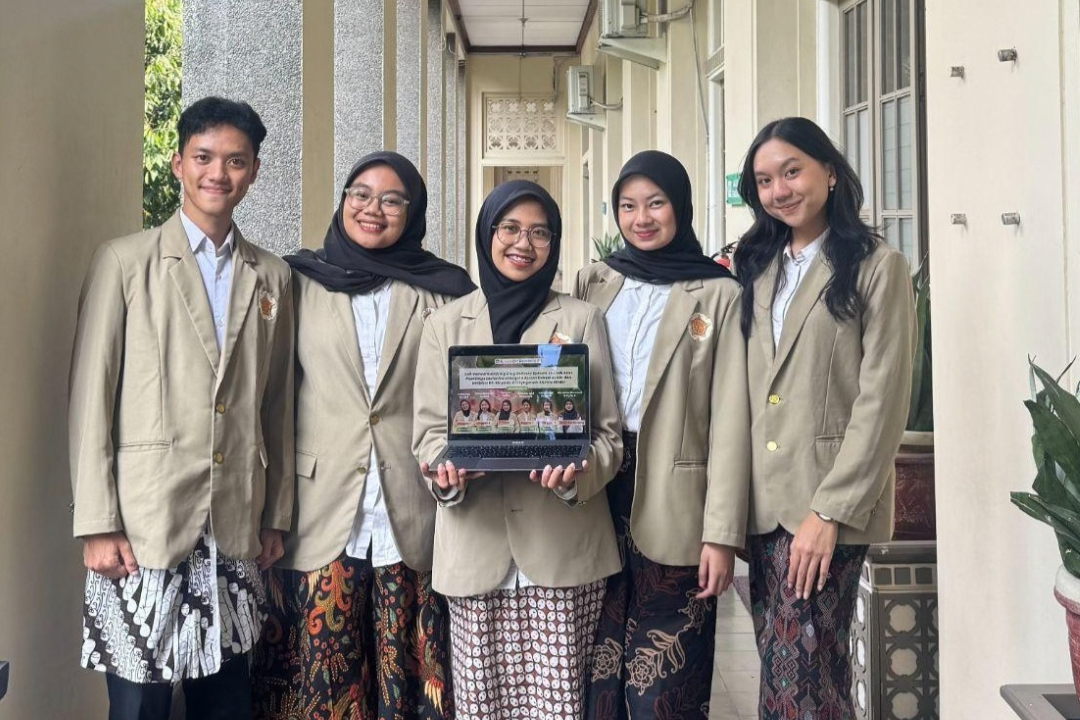
In response to these issues, five students from the Faculty of Pharmacy at Gadjah Mada University (UGM) developed ZELAVANT (Zeylanica for adjuvant), a candidate drug delivery system based on a self-nanoemulsifying drug delivery system (SNEDDS) that utilizes Plumbago zeylanica root extract. This research was conducted through the 2026 Indonesian Student Creativity Program in Exact Sciences (PKM-RE) under the guidance of Dr. Retno Murwanti, M.P., Ph.D.
The team comprising of Nasywa Zakia, Antonius Agni Bimantara, Kiara Mahesita Amellia, Fariza Ayu Nur Aini, and Adinda Putri Az Zahra developed ZELAVANT as a potential adjuvant for doxorubicin. The idea stemmed from the use of doxorubicin as a chemotherapy agent for cancer, as well as the challenges of toxicity and chemoresistance that can accompany its use.
“We chose this topic because breast cancer has a high prevalence and its treatment still poses many challenges. At the same time, the development of nano-based formulations is advancing rapidly. We see an opportunity to combine the two by utilizing plants found in Indonesia,” said Nasywa, the ZELAVANT team leader.
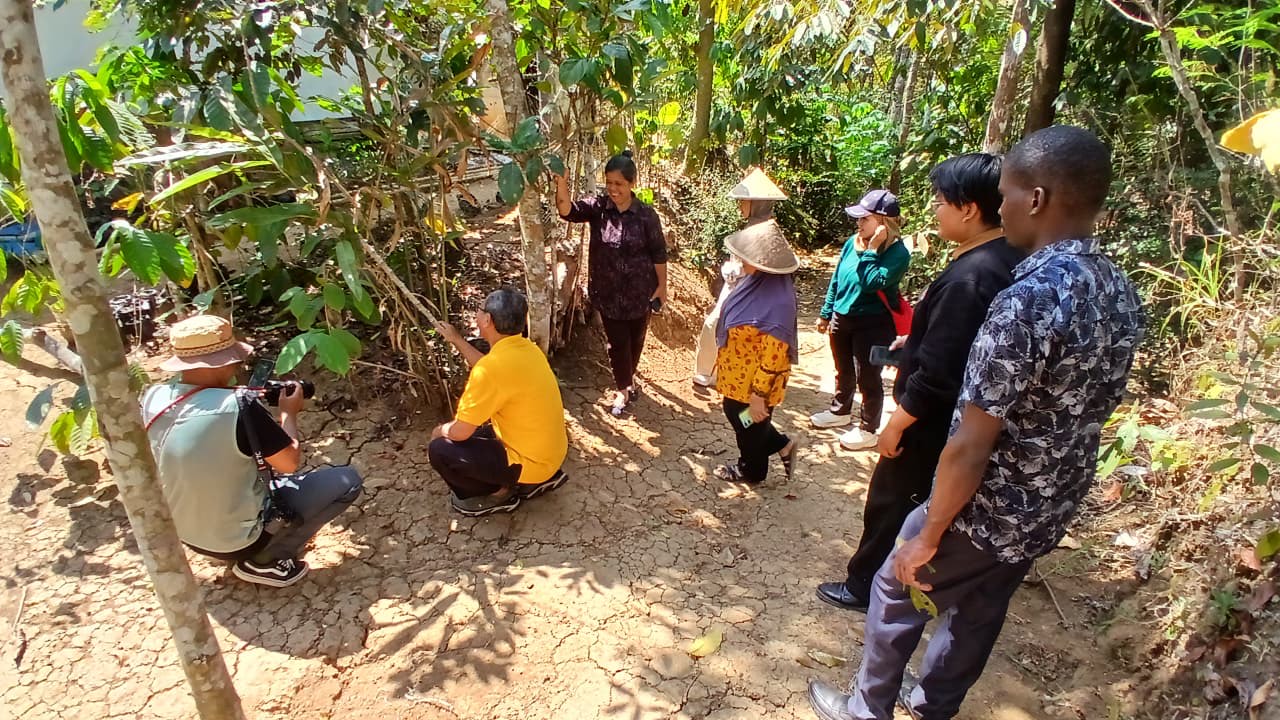
The team then selected Plumbago zeylanica, also known as Ki encok, as the source of the active ingredient. This plant is native to Indonesia and remains relatively underutilized. The root was chosen because it is known to have a high plumbagin content.
Plumbagin is a naphthoquinone compound with anticancer activity, which it exerts in part by influencing the NF-κB pathway. This pathway is involved in various processes that support the survival of cancer cells. This potential served as the basis for the team’s exploration of P. zeylanica root extract as an adjunct to doxorubicin.
The next challenge is plumbagine’s low water solubility. To address this, the team developed a P. zeylanica root extract in the form of SNEDDS. This system utilizes a combination of oils, surfactants, and cosurfactants that can spontaneously form nanoemulsions when placed in an aqueous environment. With this approach, the team hopes to help improve the solubility and delivery of the active compound.
The research, which took place from June to September 2026, was conducted in several stages, ranging from plant extraction and extract characterization to the development of SNEDDS formulations and testing using cell and animal models. The team also conducted in silico studies to explore the interactions of plumbagin with targets related to anticancer activity. One of the most fascinating aspects for the team actually emerged when the research entered the animal testing phase. 4T1 cancer cells were used to create tumor models in mice so that the team could observe tumor development firsthand.
In addition, SNEDDS’s ability to spontaneously form nanoemulsions when placed in artificial gastric fluid was another aspect that intrigued the team. This process demonstrates how a combination of materials that, at first glance, appears to be a simple mixture can be developed into a delivery system with nano-scale characteristics.
The results of the study indicate that extract formulations in SNEDDS can be developed with characteristics that support their use as a delivery system. In biological assays, the combination of P. zeylanica extract in SNEDDS with doxorubicin also demonstrated suppression of NF-κB and Bcl-2 expression compared to the tumor control group. These findings provide a preliminary basis for the further development of ZELAVANT as a doxorubicin adjuvant candidate. Through this research, the team hopes that the exploration of local plants can continue to yield various candidates for doxorubicin adjuvants, which still require further study.
This breakthrough, initiated by students from the UGM Faculty of Pharmacy, contributes directly to the achievement of the Sustainable Development Goals. ZELAVANT’s innovation in supporting the effectiveness of breast cancer therapy aligns with SDG 3 on Good Health and Well-being, which aims to reduce mortality from noncommunicable diseases. Furthermore, the use of the local plant Ki encok (Plumbago zeylanica), integrated with nanoemulsion formulation technology, represents a tangible manifestation of SDG 9 on Industry, Innovation, and Infrastructure. Through this ongoing research, it is hoped that the potential of Indonesia’s natural resources can continue to be explored to yield various high-value pharmaceutical candidates capable of competing on the global stage.
Writer: Nasywa Zakia | Editor: Fathul | Photo: Nasywa Zakia