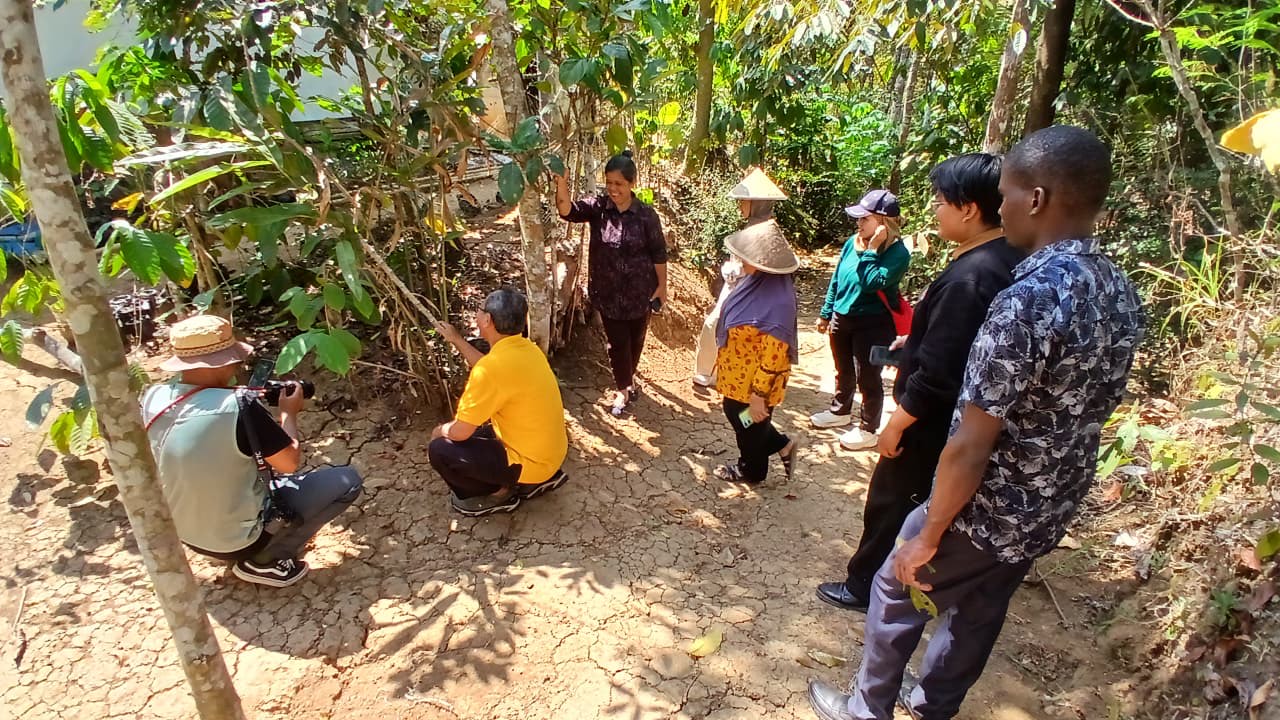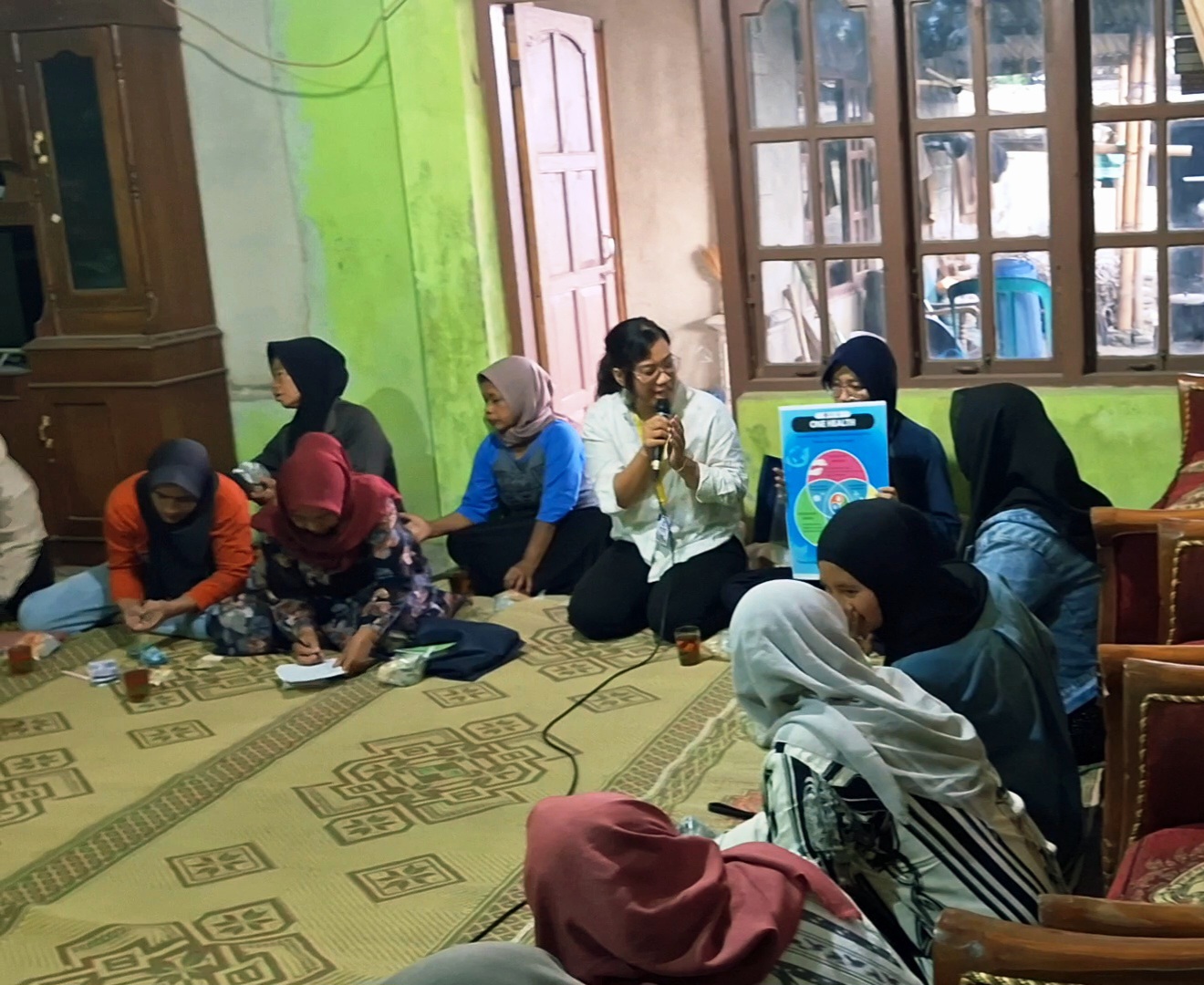
Klaten, 27 Juli 2026— Students of the Universitas Gadjah Mada (UGM) KKN-PPM program introduced the One Health concept to the community of Balerante Village, Kemalang District, Klaten Regency, through educational activities and the utilization of herbal ingredients. The initiative was a collaboration between Detrisia Desilia Christina Bansaleng, a Pharmacy student at UGM, and Chairunisa Bethari Sabrina Rosyady, a Veterinary Medicine student at UGM, promoting the interconnectedness of human, animal, and environmental health in the slopes of Mount Merapi.
The program began with a community seminar on the One Health approach, which recognizes human, animal, and environmental health as interconnected and mutually dependent. The concept was introduced in the context of Balerante Village, where residents live closely with both the natural environment and livestock farming. This educational session provided the foundation for simple, practical measures that communities can adopt to maintain animal health while preserving the surrounding environment.
Following the seminar, the program continued with two practical workshops that reflected the students’ respective academic backgrounds. Chairunnisa, as T a veterinary medicine student, introduced the production of herbal probiotics for livestock, while Detrisia, as a Pharmacy student, demonstrated the preparation and application of herbal bio-disinfectants to support hygiene and biosecurity in livestock farming environments.
During the bio-disinfectant workshop, participants learned how to utilize locally available ingredients, including betel leaves, lemongrass, and orange peels. The use of orange peels was particularly relevant to Balerante’s local potential as a citrus-picking tourism destination, transforming what is often considered agricultural waste into a valuable natural resource.
 Meanwhile, the herbal probiotic workshop introduced natural ingredients such as turmeric, Java turmeric (temulawak), papaya leaves, molasses, and EM4 as alternative materials to support livestock health. The activity encouraged communities to explore locally accessible resources that can be incorporated into everyday livestock management practices.
This cross-disciplinary collaboration demonstrated a practical implementation of the One Health concept at the community level. Herbal probiotics contribute to maintaining animal health, while herbal bio-disinfectants help improve environmental hygiene and biosecurity. Together, these approaches highlight the close relationship between human well-being, healthy livestock, and a sustainable living environment.
The initiative also contributes to several Sustainable Development Goals (SDGs). It supports SDG 3: Good Health and Well-being by promoting preventive and community-based health education for humans and animals. The utilization of orange peels and other locally sourced herbal materials reflects SDG 12: Responsible Consumption and Production through the efficient use of natural resources and the added value of organic waste. Furthermore, the adoption of herbal biosecurity practices in the Mount Merapi area contributes to SDG 15: Life on Land by encouraging environmentally responsible livestock management and supporting the conservation of terrestrial ecosystems.
Through this program, UGM KKN-PPM students not only introduced the One Health concept but also encouraged local communities to recognize the potential of natural resources surrounding them as part of sustainable health and environmental stewardship. The use of locally available materials is expected to strengthen the implementation of One Health while supporting the long-term development of Balerante Village and the Mount Merapi region.
Author: etrisia Desilia Christina Bansaleng dan Chairunisa Bethari Sabrina Rosyady