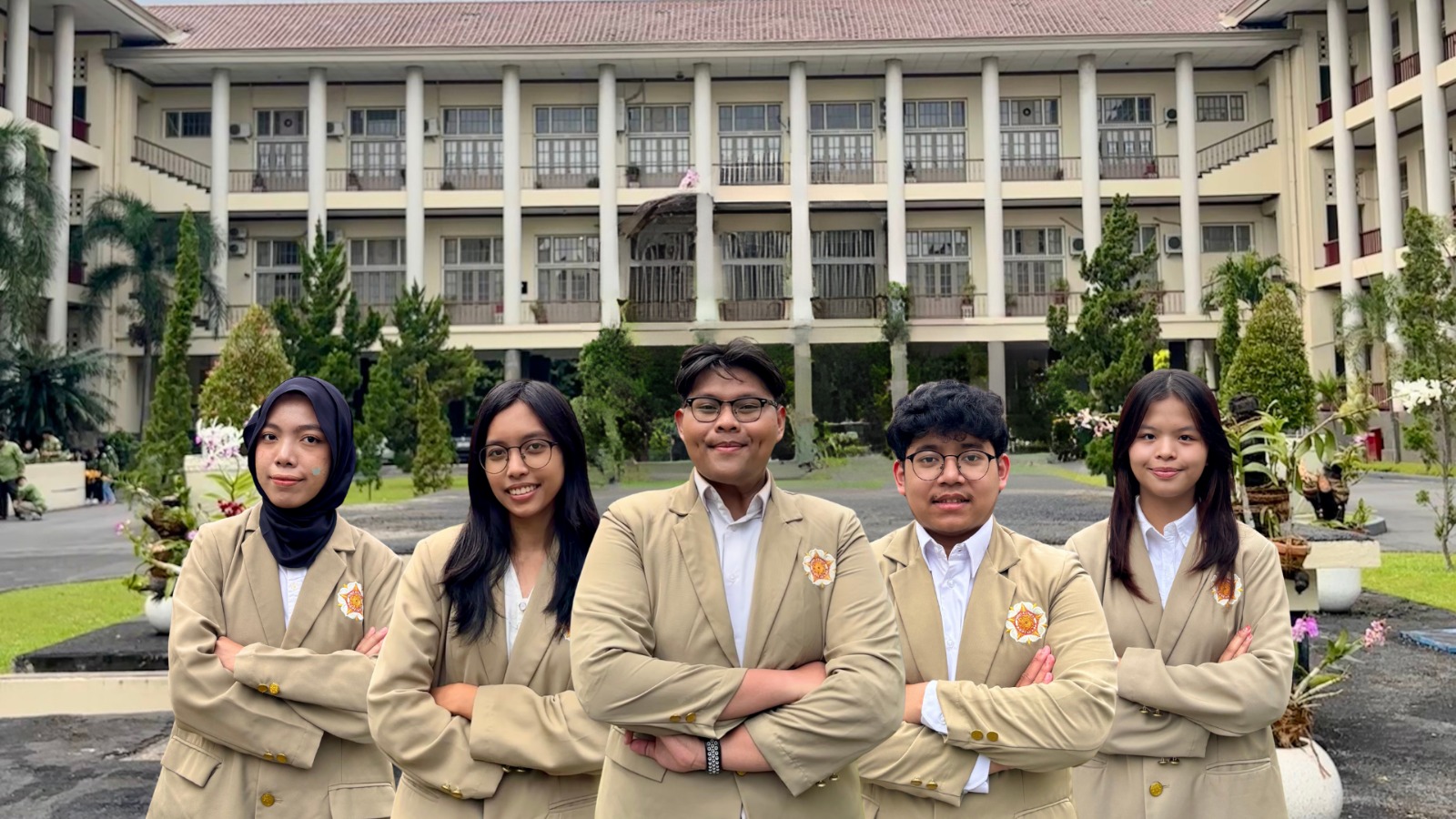
Yogyakarta, October 15, 2025 – A team of students from Universitas Gadjah Mada (UGM) participating in the Student Creativity Program for Exact Research (Program Kreativitas Mahasiswa Riset Eksakta/PKM-RE) conducted a study on the potential of rosemary leaf extract (Rosmarinus officinalis L.) as a nephroprotective agent for acute kidney injury (AKI) therapy. This research holds high significance, as current AKI management primarily focuses on supportive therapy without any specific pharmacological interventions to prevent kidney damage.
The team leader, Randika Taufiq Hari Nugraha (Faculty of Medicine, Public Health, and Nursing), explained that acute kidney injury is a critical condition that can be life-threatening if not managed promptly and properly. “Current therapeutic approaches remain limited to symptom control. Through this research, we aim to explore natural compounds that may offer protective effects on kidney tissues,” he stated.
The research involved Artha Maressa Theodora Simanjuntak (Faculty of Medicine, Public Health, and Nursing), Frengki Prabowo Saputro Wijayanto (Faculty of Medicine, Public Health, and Nursing), Devi Vita Sari (Faculty of Pharmacy), and Evelyn Hartono (Faculty of Veterinary Medicine), under the supervision of Dr. Nur Arfian, Ph.D., from the Faculty of Medicine, Public Health, and Nursing (FK-KMK) UGM.
According to Devi Vita Sari, rosemary leaves contain key bioactive compounds such as rosmarinic acid and quercetin, which are known for their antioxidant and anti-inflammatory activities. These compounds have the potential to prevent kidney damage induced by oxidative stress and calcium oxalate crystal formation. “Using UV-Vis spectrophotometry, thin-layer chromatography (TLC), and antioxidant activity testing through the DPPH method, we successfully identified phenolic and flavonoid contents that contribute to nephroprotective activity,” she explained.
Artha Maressa Theodora Simanjuntak added that the experimental results showed consistency between the phytochemical profile and the bioactive potential of rosemary. “These compounds were proven to help suppress oxidative stress, one of the main mechanisms leading to kidney cell damage,” she noted.
Meanwhile, Evelyn Hartono emphasized the importance of a multidisciplinary approach in natural product-based research. “This study is expected to provide a scientific foundation for the development of effective, safe, and affordable alternative therapies for acute kidney injury,” she said.
Frengki Prabowo Saputro Wijayanto further stated that this research is expected to contribute to the development of herbal medicine-based drugs in Indonesia. “We hope the findings can progress to the preclinical testing phase and potentially be developed into a phytopharmaceutical candidate,” he remarked.
The research received funding support from Simbelmawa and academic supervision from FK-KMK UGM lecturers. The results will be published in a scientific article as an initial step toward further testing in pharmacology and nephrology.
Beyond contributing to scientific and innovative advancement in pharmacy and medicine, this study also supports Sustainable Development Goal (SDG) 3: Good Health and Well-being, by exploring the potential of natural materials as alternative therapies for kidney diseases, thus helping to improve public health, prevent chronic diseases, and develop safer, more effective, and sustainable treatments. Additionally, it aligns with SDG 4: Quality Education, through the research-based learning outcomes achieved, and supports SDG 11: Sustainable Cities and Communities, by promoting the use of natural resources toward the creation of safer and more resilient communities.
Kontributor: PKM-RE Rosnephralis Team