Yogyakarta, December 10–15, 2025 – Gadjah Mada University (UGM) held the Nitilaku Exhibition for UGM’s 76th Anniversary, entitled “Exhibition of the History of the Journey of Knowledge” with the theme of Public Health, which took place at the Student Centre of Innovation and Creativity Center (GIK). This exhibition is part of a series of events celebrating UGM’s 76th Anniversary and highlights the strategic role of public health and environmental protection oriented towards comprehensive health.
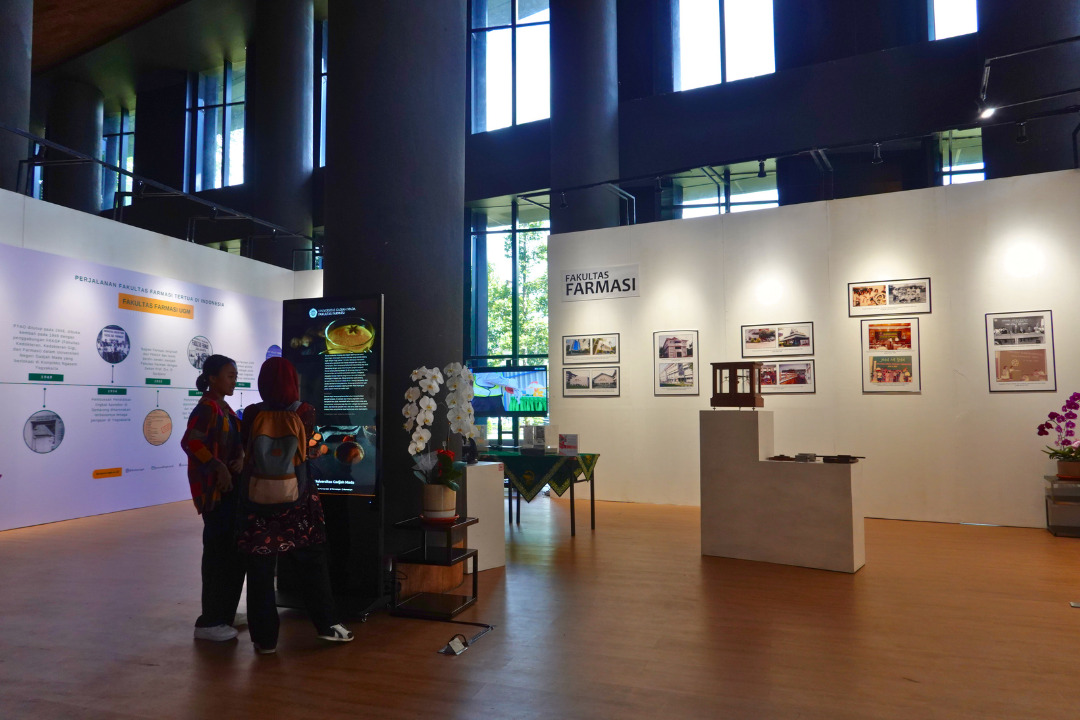
The Nitilaku UGM 2025 Exhibition presents a variety of educational content that illustrates the journey and development of health faculty in UGM, including the history of all faculty, developments in medical technology, important drug discoveries, knowledge about herbal medicine, developments in clinical therapy, and the results of public health research. A cross-faculty collaboration between the Faculty of Medicine, Public Health, and Nursing; the Faculty of Pharmacy; the Faculty of Psychology; and the Faculty of Dentistry presents scientific highlights, academic traditions, and important figures and their contributions to the history of medicine, pharmacy, psychology, and public health at Gadjah Mada University.
Designed to be attractive and interactive, this exhibition features a variety of educational activities such as demonstrations, health tests, medical simulations, consultations, and free examination and therapy services for visitors. Technological support such as touch screens, audio-visuals, 3D models, and medical equipment dioramas provide an enjoyable and practical learning experience. In addition to being a public education tool, the Nitilaku UGM 2025 Exhibition also serves as a platform for promoting education and research, as well as disseminating innovations in the field of health.
This activity is in line with UGM’s commitment to supporting the Sustainable Development Goals (SDGs), particularly SDG 3 (Good Health and Well-being), SDG 4 (Quality Education), and SDG 9 (Industry, Innovation, and Infrastructure), through improving health literacy and utilizing research results for the welfare of society.