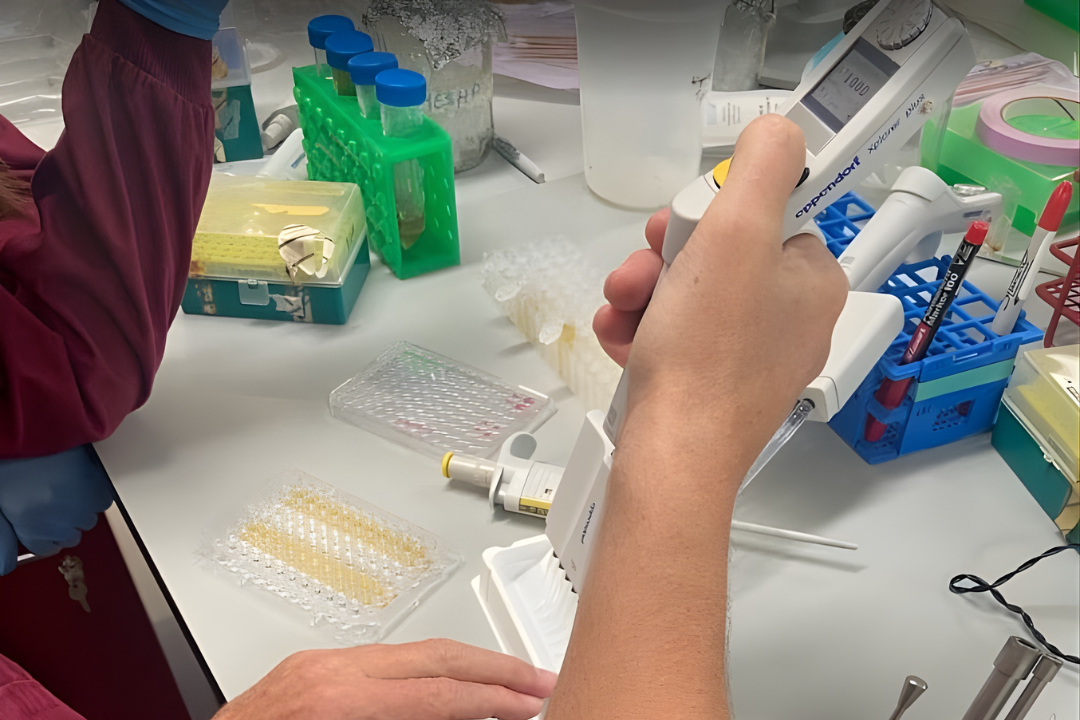
Yogyakarta, 18 February 2026 – The Faculty of Pharmacy, Universitas Gadjah Mada (UGM), continues to strengthen its international research network through its student research exchange program. Nazira Aydin Hatif, an International Undergraduate Program (IUP) student from the class of 2021, has successfully conducted collaborative research with the University of Otago, New Zealand. The research focuses on the development of a Bioluminescence Resonance Energy Transfer (BRET) system based on NanoLuc and HaloTag technology in the yeast model Saccharomyces cerevisiae. The study was conducted under the supervision of Apt. Setyowati Triastuti Utami, Ph.D., and is a result of collaboration with Dr. Erwin Lamping from the Sir John Walsh Research Institute and Prof. Richard David Cannon from the Faculty of Dentistry, University of Otago.
This research stems from the rapid development of NanoBRET technology, a light-based technology that allows researchers to observe how proteins interact within living cells. The system works by combining two main components, NanoLuc and HaloTag, which generate a light signal when two target proteins are in very close proximity. Despite offering high sensitivity, the utilization of this technology is currently limited to mammalian cell systems.
Therefore, through this collaboration, the research team sought to adapt NanoBRET technology for application in S. cerevisiae yeast, a model organism widely used in basic biological research. The adaptation was carried out by modifying the expression system using specific yeast strains and tailored plasmids, allowing the technology to potentially be applied beyond mammalian cell systems. In addition to this primary achievement, the research team also utilized synthetic terminators as artificial genetic elements engineered to have higher efficiency compared to natural terminators. This step is part of an effort to contribute to the field of synthetic biology.
The results of this research are expected to produce superior new model organisms for basic research, particularly in studying protein interaction mechanisms as well as antifungal and antimicrobial resistance. This contribution concurrently strengthens the role of the Faculty of Pharmacy UGM in global scientific development and health innovation.
Broadly, this research supports the achievement of the Sustainable Development Goals (SDGs), particularly SDG 3 (Good Health and Well-being) through the development of a scientific basis for overcoming antimicrobial resistance, SDG 4 (Quality Education) by strengthening student research capacity within global networks, and SDG 17 (Partnerships for the Goals) through the strategic collaboration between the Faculty of Pharmacy and the University of Otago in driving science-based health innovation.