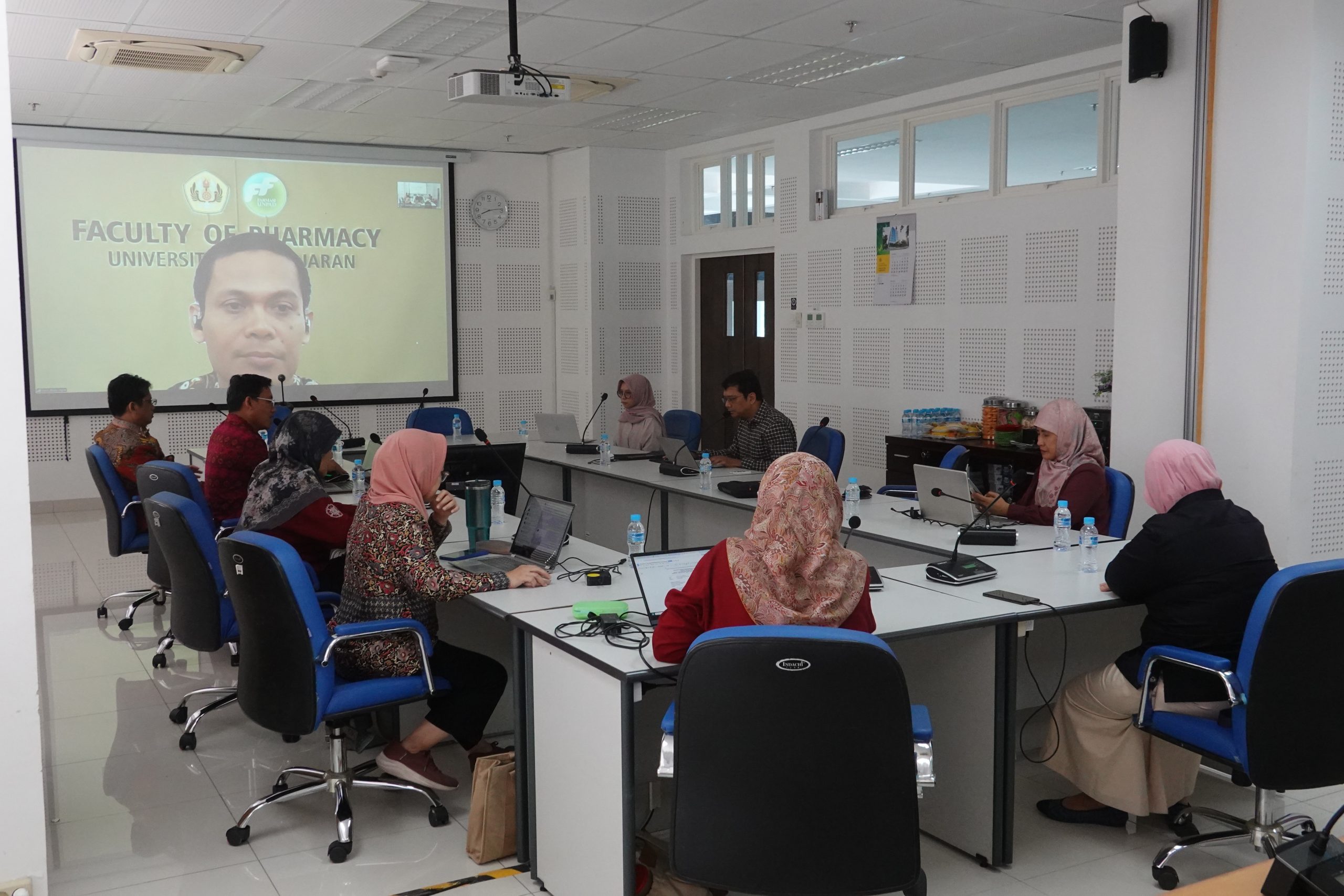
Yogyakarta, January 13, 2026 — The Faculty of Pharmacy, Universitas Gadjah Mada (UGM), conducted a Workshop on the Establishment and Minimum Accreditation of the Specialist Pharmacist Study Program as part of the preparation for launching a new study program aimed at advancing pharmaceutical education in Indonesia. The workshop was held on Tuesday, January 13, 2026, from 08:00 to 15:00 WIB, at the APSLC Leadership Meeting Room, 7th Floor, Faculty of Pharmacy UGM.
The workshop served as an important forum to discuss academic readiness, curriculum development, human resources, and the fulfillment of minimum accreditation standards for the Specialist Pharmacist Study Program. The event was attended by the Dean of the Faculty of Pharmacy UGM, the Vice Dean for Finance, Assets, and Human Resources, and the Vice Dean for Research, Community Service, Cooperation, and Alumni, along with lecturers and practitioners from the Faculty of Pharmacy UGM and other institutions.
The activity featured apt. Holis Abdul Holik, Ph.D. from Universitas Padjadjaran as a keynote speaker, who delivered a presentation on best practices for establishing a Nuclear Pharmacy Specialist Study Program. The second presentation addressed the requirements for opening a Specialist Pharmacist Study Program as well as the minimum accreditation standards, delivered by Dra. apt. Titiek Martati, M.Si., representative from LAM-PTKes. The presence of these speakers enriched the discussion on policy formulation, curriculum development, fulfillment of accreditation standards, and the strengthening of the quality of professional pharmaceutical education. The activity was subsequently continued with an independent working session of the Specialist Pharmacist Study Program Development Team of the Faculty of Pharmacy, Universitas Gadjah Mada, to follow up on the outcomes and recommendations generated during the discussion.
The implementation of this activity reflects the Faculty of Pharmacy UGM’s commitment to supporting the Sustainable Development Goals (SDGs), particularly SDG 3 (Good Health and Well-Being) through strengthening the competencies of specialist pharmacists to improve the quality of healthcare services, SDG 4 (Quality Education) through the development of high-quality and standardized advanced professional education, and SDG 9 (Industry, Innovation, and Infrastructure) by promoting innovation and strengthening pharmaceutical education systems that are adaptive to advancements in science and technology.