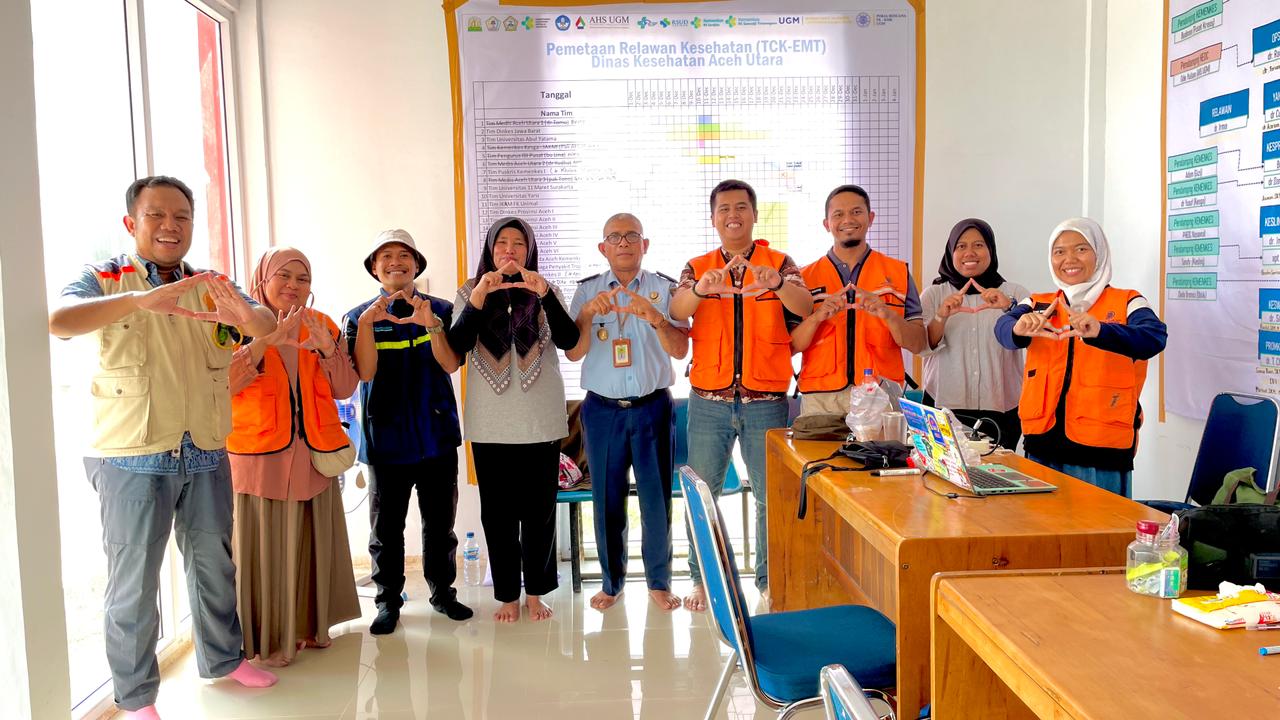
Yogyakarta, 29 December 2025 — As a concrete manifestation of community service and humanitarian spirit, a lecturer from the Faculty of Pharmacy, Universitas Gadjah Mada (UGM), apt. Muhammad Seftian, M.Pharm.Sci., recently joined the Flood Disaster Response Team following Tropical Cyclone Senyar in Aceh and North Sumatra. This initiative underscores the strategic role of lecturers, which extends beyond classrooms and laboratories to the frontlines of crisis management.
The mission was centered in North Aceh Regency, specifically in the Lhoksukon area. During the assignment, Seftian served as the Pharmaceutical Logistics Coordinator, managing the supply of medicines, medical devices, and disposable medical supplies. The team’s primary focus was to revitalize public health facilities, directing services to the Sampoiniet Health Center (Puskesmas) in West Baktiya and the Lhoksukon Health Center.
Field Challenges and Rapid Adaptation The dynamic field conditions demanded extraordinary physical and mental preparedness. Transport routes were severed due to damage to the Kuta Blang bridge, forcing the team to cross rivers using traditional rafts (getek) to save time and avoid traffic jams lasting up to a dozen hours.
“In a disaster situation, we don’t have the luxury of choice. Rapid adaptation is key. We tackle whatever is in front of us,” said Seftian. Personal logistics were managed independently and tactically, from packing 10 days’ worth of clothing in plastic to anticipate water shortages and humid conditions, to ensuring personal mobility with essential survival gear.
Sustaining the Pulse of Healthcare At the affected sites, the medical team served an average of 30 to 40 patients daily. The prevailing health issues included Non-Communicable Diseases (NCDs) and skin conditions such as eczema, infections, and scabies caused by unhygienic post-flood environments.
Despite language barriers, as local residents predominantly spoke regional dialects, the community’s enthusiasm for seeking medical treatment remained high. This served as additional motivation for the volunteers to provide the best possible care, collaborating with local pharmacy technicians to ensure drug distribution continued despite limited supplies.
A Message for the Future of Pharmacy Reflecting on this experience, Seftian sent a powerful message to UGM Pharmacy students and colleagues regarding the importance of broad horizons and toughness in all situations.
“Regardless of your profession or background, everyone will be of use in a disaster zone. Pharmacy students and professionals need to ‘venture further’ to broaden their perspectives and learn inter-professional collaboration, so they can develop high resilience in any circumstance,” he concluded.
The involvement of a UGM Pharmacy lecturer as a disaster response volunteer aligns with the achievement of the Sustainable Development Goals (SDGs), particularly SDG 3 (Good Health and Well-Being) through the provision of healthcare and pharmaceutical services to disaster-affected communities, SDG 13 (Climate Action) by responding to the impacts of extreme climate events such as tropical cyclones, and SDG 17 (Partnerships for the Goals) through collaboration among academics, healthcare professionals, and local communities. This concrete action reflects the commitment of higher education institutions in strengthening community health resilience, reducing the vulnerability of affected populations, and ensuring that no one is left behind during times of crisis and emergency.
This action is expected to inspire the UGM academic community to continue contributing to society, proving that the dedication of pharmacists and academics is a vital pillar of national health security, especially during emergencies. (Yassifa/HumasFA)