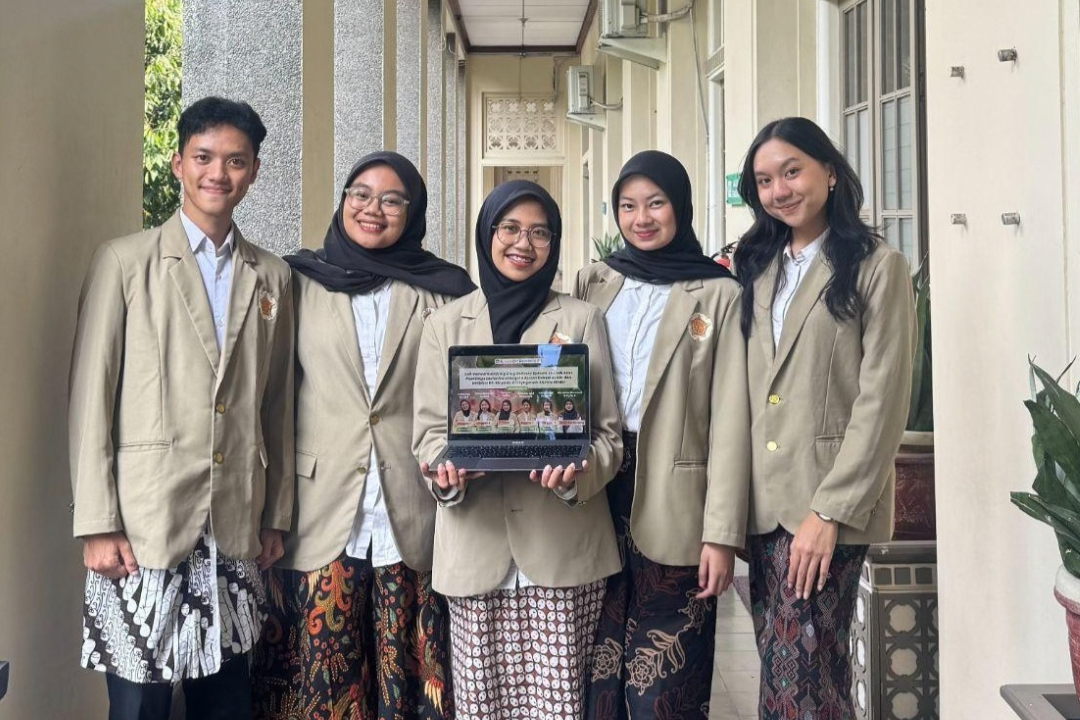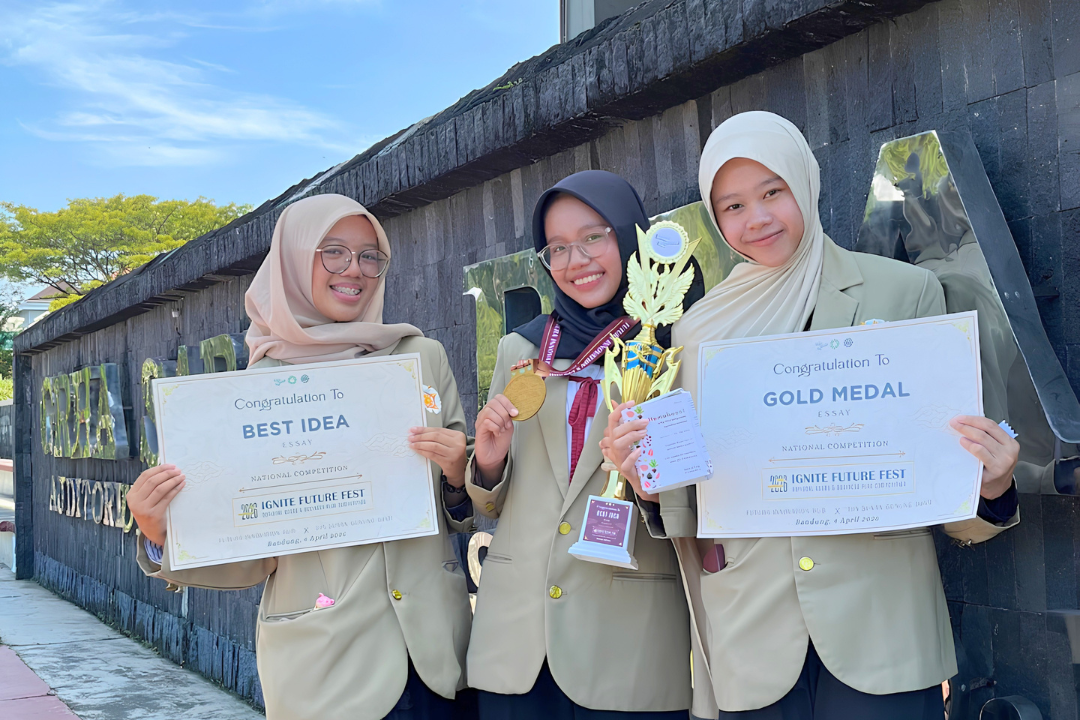
Yogyakarta, April 5, 2026 – Prestigious achievements have been recorded by Universitas Gadjah Mada students, as a team from the Faculty of Pharmacy, led by Ngaisyah Intan Nuraini alongside members Ika Pratiwi Nurprayitnawati and Zulfana Raisya Chairunia Amir, successfully secured both the Gold Medal and the Best Idea Award. They won these accolades at the Ignite Future Fest 2026 National Competition, organized by Futura Innovation Hub in collaboration with Medispro from January 19 until the live final presentation on April 4–5, 2026, at UIN Sunan Gunung Djati, Bandung. Bearing the theme “Academic Innovation Forum: Integrating Critical Thinking, Social Innovation, and Sustainable Entrepreneurial Capabilities within the Framework of Inclusive Development and Achieving Indonesia’s SDGs,” the UGM team triumphed over other notable innovations from top-tier universities, including Universitas Airlangga, Universitas Diponegoro, IPB University, and Universitas Negeri Semarang.
This remarkable victory was achieved through their visionary idea to address the high prevalence of anemia in Indonesia, which currently affects approximately 32% of teenage girls aged 15–24. To tackle the lack of compliance and low early awareness towards the government’s conventional iron supplementation (TTD) program, the UGM Pharmacy team crafted a natural local food-based alternative called Jelly Strip. This product utilizes a synergistic combination of snake fruit (salak) seed extract, guava, and red beetroot naturally rich in bioavailable iron and vitamin C to optimize hemoglobin absorption. Taking a holistic approach, this physical product is augmented by a digital ecosystem through a dedicated website that serves as an initial health-screening and continuous monitoring system for teenagers.
This multidimensional innovation was methodically mapped out to support the acceleration of the Sustainable Development Goals (SDGs) in Indonesia across several vital points. By intervening with a natural-based formulation, this project directly contributes to SDG 3 (Good Health and Well-Being) by reducing anemia rates among teenage girls as a critical productive demographic to ensure a healthier future generation. Furthermore, it supports SDG 4 (Quality Education) because eliminating this micronutrient deficiency fully restores students’ cognitive capabilities, learning focus, and academic productivity in school. Lastly, the utilization of indigenous ingredients represents a clear manifestation of SDG 2 (Zero Hunger – Nutritional Sub-target) by fostering nutritional improvements and food security via the diversification of functional food sourced locally. Overall, the success of the UGM Pharmacy Team underscores that the integration of rigorous academic critical thinking, social sensitivity toward local healthcare issues, and digital technology can yield sustainable entrepreneurial solutions that drive impactful progress for the nation.
Writer : Sekar Ayu Larasati I Editor : Fathul Muin